For the premieres of his symphonies, Vaughan Williams focused on purely musical matters like thematic relationships, rather than explaining their emotional content.
Composition History
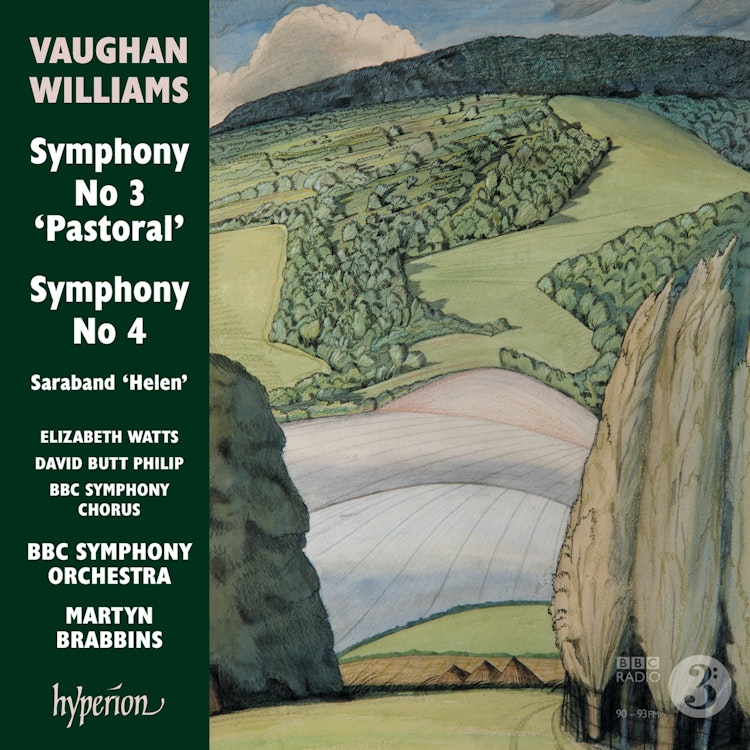
Vaughan Williams's 'Pastoral' Symphony was partly inspired by his memories of the battlefields of Flanders, which he witnessed during his military service in World War I.
Historical Context
The year 1922 saw the premieres of three significant English symphonies, including Vaughan Williams's 'Pastoral' Symphony, showcasing the range of the contemporaneous English musical renaissance.
Composition History
Vaughan Williams's Symphony No. 4 in F minor was dedicated to Sir Arnold Bax, possibly in return for Bax's dedications of his own works to Vaughan Williams.
Critical Reception
Constant Lambert, an English composer, conductor, and writer on music, claimed Vaughan Williams's 'Pastoral' Symphony was 'one of the landmarks in modern music'.
Compositional Technique
The 'Pastoral' Symphony features a unique expressive medium, which has been described as 'triplanar harmony' or Tovey's 'polymodality', where each linear counterpoint is supported by its own harmonies.
Composition History
The 'Saraband 'Helen'' is a choral work drafted by Vaughan Williams in 1913-14 but remained unfinished and unperformed for over a century until Martyn Brabbins realized it from the original.
You might also enjoy...
Vaughan Williams: Symphonies Nos 5 & 6
Vaughan Williams: Symphonies Nos.4 & 6
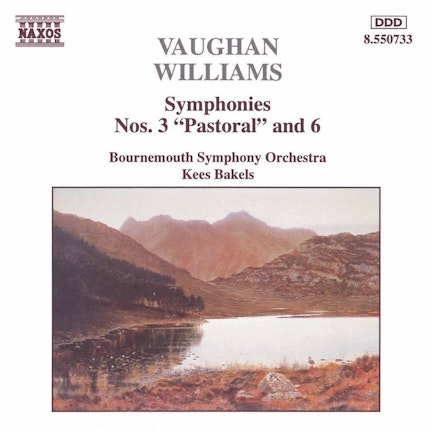
Vaughan Williams: Symphonies Nos. 3, 'Pastoral', and 6
Vaughan Williams: Symphonies Nos. 5 & 9
Vaughan Williams: Symphony No. 2 'A London Symphony' & Symphony No. 8 in D Minor
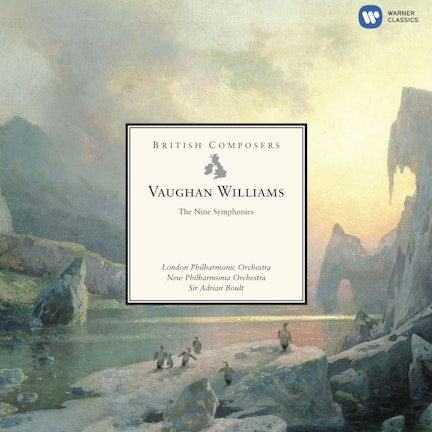
Vaughan Williams: The Nine Symphonies
Vaughan Williams: Complete Symphonies
Vaughan Williams: The Complete Symphonies
Vaughan Williams: Complete Symphonies
André Previn Conducts Vaughan Williams Symphonies 1-9, Concerto and More