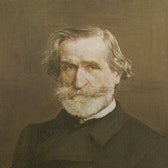
In creating La traviata, Verdi deliberately violated the social mores and laws of common decency of his day by making a representative of the demimonde his heroine.
Composition History
Verdi's opera La traviata is indirectly based on Alexandre Dumas the Younger's novel 'La Dame aux camélias', which explores the life of a professional prostitute.
Compositional Technique
In Act II of La traviata, after Violetta's sacrifice, Verdi creates a powerful effect by having the soprano repeat her cabaletta melody without orchestral accompaniment after a long pause, symbolizing her loss of support.
Critical Reception
At its premiere, the contemporary relevance of La traviata was obscured by using costumes from around 1700, and the ending was given a moralistic turn, interpreting Violetta's death as atonement.
Compositional Technique
Verdi incorporated fashionable contemporary dances, particularly the waltz rhythm, into La traviata to depict the acoustic atmosphere of Paris and the pleasure-seeking of a high-class prostitute's clientele.
Historical Context
The stage adaptation of 'La Dame aux camélias', Verdi's direct source for La traviata, was banned in Victorian London until 1881 due to its offensive subject matter.