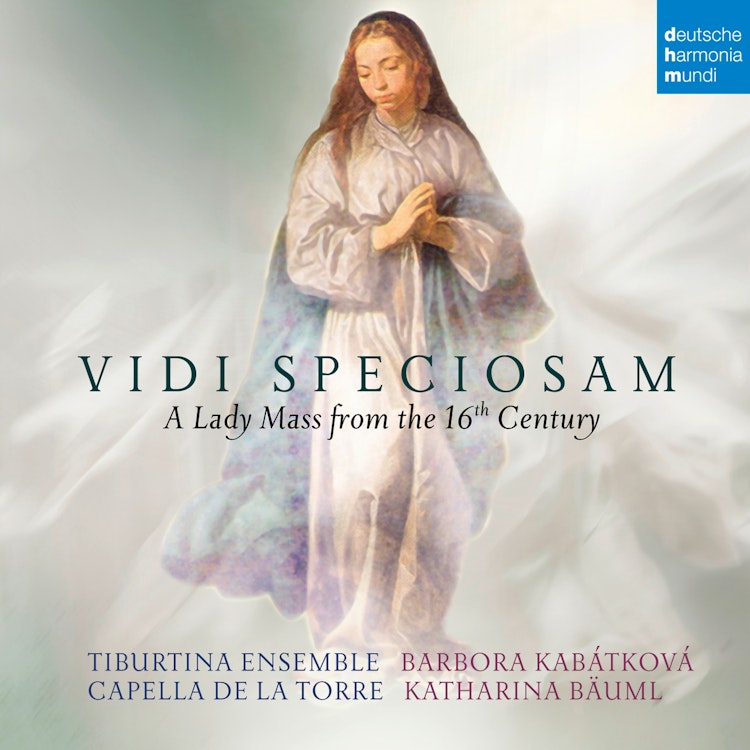
Vidi Speciosam - A Lady Mass from the 16th Century
4/20/2018, 20 Tracks, 1:05:05
Featuring
Katharina Bäuml
Capella de la Torre
Tiburtina Ensemble
Augustine Bassano
Tomás Luis de Victoria
Anonymous (Gregorian Chant)
Francisco de la Torre
Did you know?
1/7
Compositional Technique
Due to the inability of female singers to reach tenor or bass parts, instruments were used to supplement missing voices in convent performances, a practice that was documented.
Historical Context
In Spain, reed instruments like the bajón (bass bassoon) were commonly used in convent chapel services, with records showing nuns being taught to play them.
Interpretation
This recording reconstructs the sound of a Marian Mass in a Spanish convent from the late 16th century, combining women's voices for plainchant with polyphonic works featuring voices and instruments.
Historical Context
Public performances by nuns sometimes became so popular that bishops banned them, accusing the nuns of 'worldly vanity'.
Historical Context
In 1584, Ascanio Trombetti, a composer, taught trombone at San Lorenzo's Convent in Bologna until a ban was enacted.
Historical Context
In many convents of the early modern period, music played a more central role than Church authorities deemed appropriate, as evidenced by Inquisition records.
Historical Context
Wealthy convents often housed daughters of high-ranking families who were musically literate and had few duties beyond chapel services, leading to interest in performing contemporary polyphonic music.
You might also enjoy...
San Marco di Venezia: The Golden Age
Eccard: Sacred & Secular Works
Cantate Deo: A voce sola, in dialogo
Praise the Lord. Luthers Lieder auf dem Weg in die Welt
Praise the Lord: Luthers Lieder auf dem Weg in die Welt
Hagios
Venecie mundi splendor: Marvels of Medieval Venice
Music Before Bach
Cantamus Aurora
Renaissance am Rhein
Love So Amazing: The Hymn Arrangements of Stuart Forster