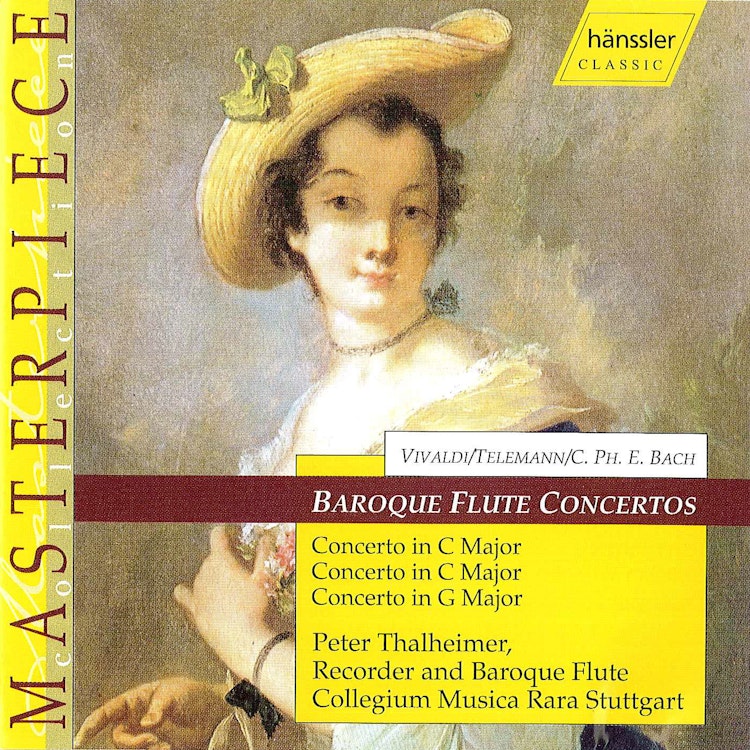
The 'concertante principle' of the Baroque era, meaning both 'to compete' and 'to act in harmony,' led to the development of the instrumental solo concerto in Italy during the late 17th century.
Compositional Technique
Georg Philipp Telemann's concertos combine elements from various national styles, including concerto, sonata, and suite, blending 'galant' and 'empfindsam' styles.
Historical Context
Around 1718, pieces written specifically for the flute were rare, according to Johann Adam Hiller's 'Lebensbeschreibungen' of 1784.
Compositional Technique
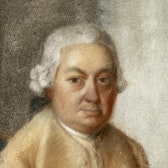
Carl Philipp Emanuel Bach's Concerto in G major from 1755 incorporates the sonata 'first-movement' form of the Viennese classical era and early classical symphony writing techniques.
Historical Context
The development of Baroque woodwind instruments like the recorder, transverse flute, oboe, and bassoon in France around 1700 contributed to the rise of flute concertos.
Performer Biography
Peter Thalheimer, the flutist on this album, has an extensive collection of historical and modern instruments, which supports his wide-ranging repertoire of flute music.
Compositional Technique
Antonio Vivaldi's three Concerti per Flautino are considered among the most demanding in Baroque flute literature, requiring exceptional breathing and finger technique from the soloist.
You might also enjoy...
Tommaso Giordani: 5 Concertos, op. XIX
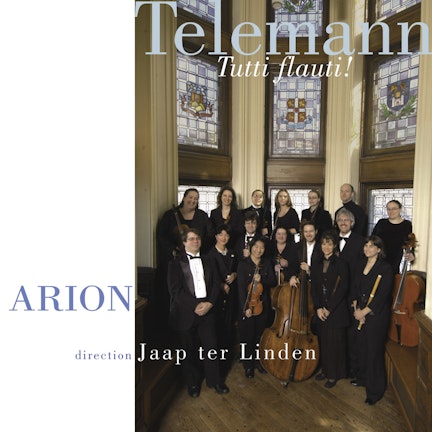
Telemann, G.P.: Tutti flauti!
Telemann: Overture / 3 Recorder Concertos
Eichner: Flute Quartets Nos. 1-6 (Il Gardellino)
Bach: Sonate a cembalo obligato e traversiere solo