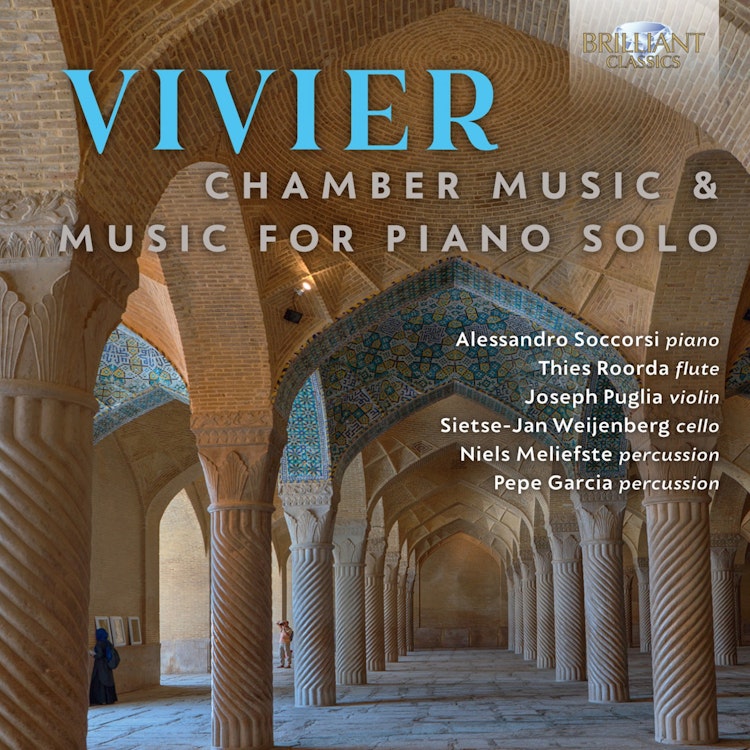
The pieces "Pianoforte" and "Pièce pour violoncelle et pianoforte" were commissioned for the third selection round of the Tremplin International Competition in 1975.
Composer's Artistic Vision
Vivier's travels to countries like Japan, Bali, Thailand, Iran, and Egypt in 1976, supported by the Canada Council, were undertaken to find new inspiration and "solve some musical problems."
Composer Biography
Vivier studied with notable composers such as Gilles Tremblay at the Conservatoire de musique in Montreal, and later with Gottfried Michael Koenig in Utrecht and Karlheinz Stockhausen in Cologne.
Compositional Technique
In "Pianoforte," Vivier uses the Fibonacci series for the duration of melody notes and bar lengths, a technique also employed by Stockhausen and Messiaen.
Composer Biography
Claude Vivier, the composer, was adopted after being abandoned at an orphanage due to being an illegitimate child in Roman Catholic Quebec, which significantly marked his life and art.
Cultural Impact
Musicologist Harry Halbreich noted that Vivier's music "really resembles no other" and places him "on the fringe of all trends," while György Ligeti described it as "Ni neo, ni retro but in no way an avantgardist."
Recording & Production
Alessandro Soccorsi, the pianist on this album, arranged "Pulau Dewata" for piano and two percussionists, showcasing the composer's colorful writing.
You might also enjoy...
Arvo Pärt: Spiegel im Spiegel
Bossi: Musica da camera
Tippet Rise Opus 2016 (Live)
Soviet Chamber Music
Déjà vu
Lazarof, H.: Cello Concerto No. 2 / Concertante for 2 Horns and 16 Strings / Divertimento Ii