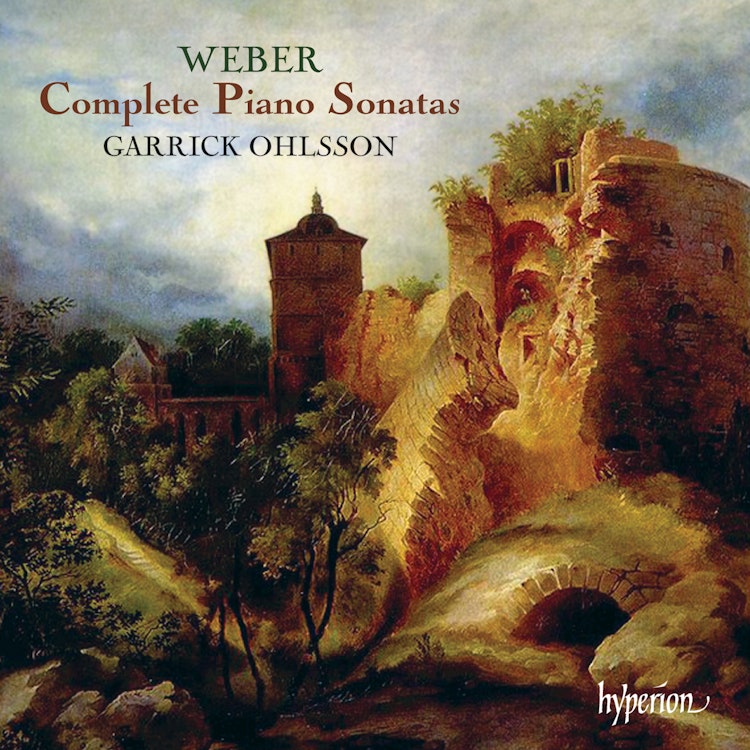
Igor Stravinsky, a Russian master of modernism, praised Carl Maria von Weber's piano sonatas for their 'instrumental bearing' and 'constant and alert control of the subjugator'.
Composer Biography
Carl Maria von Weber's greater reputation as the founder of German Romantic opera, with works like Der Freischütz, Euryanthe, and Oberon, caused his symphonic works, concertos, songs, cantatas, masses, and piano music to be largely overlooked.
Compositional Technique
The finale of Weber's Piano Sonata No. 1, dubbed L'infatigable by Weber and now known as Perpetuum mobile, features whirlwinds that have inspired arrangements by composers like Czerny, Henselt, Brahms, Tchaikovsky, and Godowsky.
Composition History
Weber wrote his Piano Sonata No. 2 as a personal performing vehicle while he was Kapellmeister in Prague and living with his fiancée, the soubrette Caroline Brandt, in Berlin.
Cultural Impact
Weber's Aufforderung zum Tanz, which evokes a ball and a dance, inspired later piano versions by Tausig and Godowsky, as well as the ballet The Spectre of the Rose, made famous by Nijinsky.
Instruments
The technical demands of Weber's Piano Sonata No. 1 were so extraordinary that its dedicatee, Grand Duchess Maria Pavlovna of Weimar, could not master it, partly due to the size of Weber's hands, which could play tenths as easily as octaves.
Critical Reception
Weber's piano sonatas were once considered, next to Beethoven's, 'unquestionably the most important and valuable of the whole newer period', often surpassing them in grandeur and make-up.
You might also enjoy...
Weber: Piano Sonatas Nos. 1 & 3
Spohr & Onslow: Piano Sonatas & Other Works
Dvorak: Four-Hand Piano Music, Vol. 2
Antonín Dovřák: Slavic Dances, Op. 46 & 72
Dvorak: Slavonic Dances
Slavonic Dances, Op. 46 & Op. 72 for Piano Four-Hands
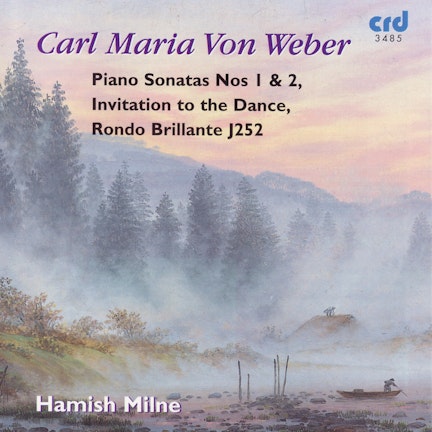
Carl Maria von Weber: Piano Sonatas
Brahms, J.: Piano Sonata No. 3 / 6 Piano Pieces (Excerpts) / Rhapsody No. 2 in G Minor
Brahms: Piano Works
Brahms: Complete Piano Sonatas
Brahms, J.: Piano Sonatas Nos. 1 and 2 / Scherzo, Op. 4
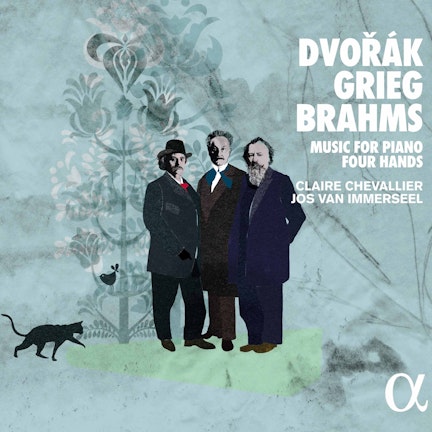
Dvořák, Grieg & Brahms: Music for Piano Four Hands
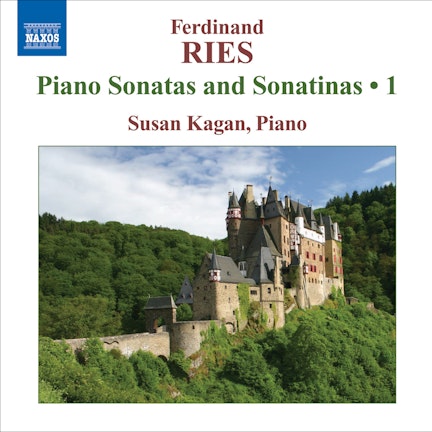
Ries: Complete Piano Sonatas and Sonatinas, Vol. 1