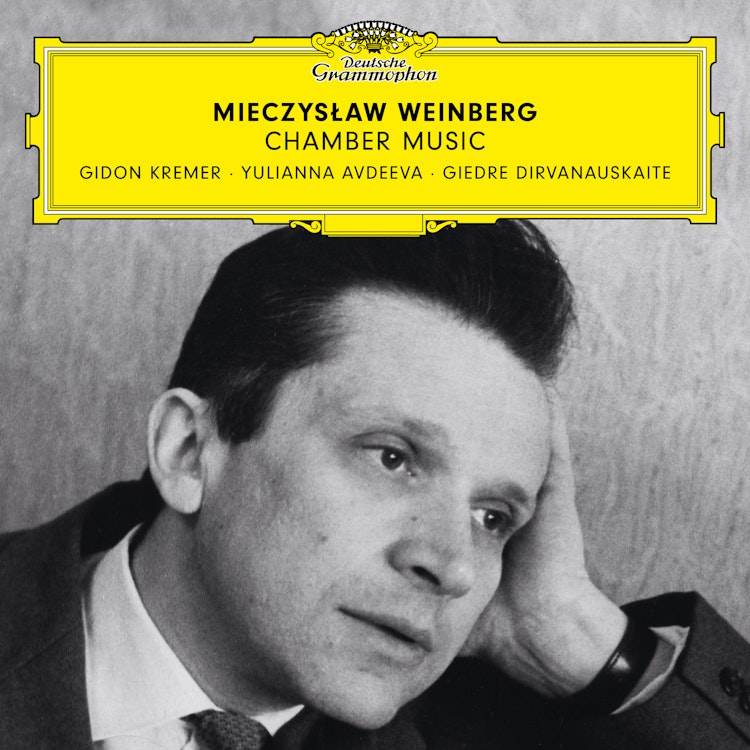
Violinist Gidon Kremer continues his exploration of the music of underappreciated Polish-born composer Mieczysław Weinberg with an album of chamber music. With Yuliana Avdeeva on piano, Kremer plays the Three Pieces for Violin and Piano – composed at the age of just 15 – and the Violin and Piano Sonata No. 6. Cellist Giedrė Dirvanauskaitė joins the performers for the Piano Trio of 1945.
Featuring
Gidon Kremer
Yulianna Avdeeva
Giedrė Dirvanauskaitė
Mieczysław Weinberg
Did you know?
1/7
Composition History
Weinberg's Three Pieces for Violin and Piano were composed when he was only fifteen, before he had received any formal compositional training.
Compositional Technique
Weinberg's Piano Trio op. 24 includes a musical quote from Shostakovich's Second Piano Trio, creating a dialogue between the friends and linking the death of Shostakovich's friend Ivan Sollertinsky with the suffering of the Jewish people.
Composer Biography
Dmitri Shostakovich, a renowned Russian composer, became a close friend of Weinberg's in Moscow, and they met almost daily to play piano and discuss music.
Composer Biography
Mieczysław Weinberg, the composer, began playing piano at a young age, performing at weddings and in cafés in the Jewish quarter of Warsaw.
Historical Context
Weinberg's world was shattered when the National Socialists invaded Poland; he was the only family member to escape, and this traumatic experience influenced his music, particularly themes of war, loss, and the Holocaust.
Critical Reception
After its premiere, Weinberg's music largely disappeared from Soviet concert halls due to Stalinist restrictions, and he was even arrested in 1953.
Composition History
Weinberg's Sixth Violin Sonata op. 136bis, composed in 1982, was forgotten by the composer and only discovered among his unpublished papers in 2007.
You might also enjoy...
Bolcom: Violin Sonatas Nos. 1-4
British Violin Sonatas, Vol. 1
Dawn & Twilight: The First & Last Violin Sonatas of Cyril Scott