Weinberg began using the term 'Chamber Symphony' because he didn't want to continue the sequence of high numbers after Symphony No. 20, and his first two chamber symphonies were arrangements of his String Quartets Nos 2 and 3.
Critical Reception
Weinberg received his only State Prize for his first two chamber symphonies, which were arrangements of music composed 45 years earlier and never published.
Composer's Artistic Vision
Mieczysław Weinberg continued to compose prolifically in his final decade, even though his works often revisited earlier compositions, and he remained committed to the symphony genre.
Performer Biography
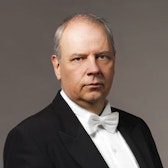
Thord Svedlund, the conductor on this album, has a special interest in promoting the music of Mieczysław Weinberg and this is his fifth SACD of Weinberg's orchestral music for Chandos.
Recording & Production
This album was recorded using 24-bit / 96 kHz technology, which offers a dynamic range up to 48 dB greater and 256 times the resolution of standard 16-bit recordings.
Composer Biography
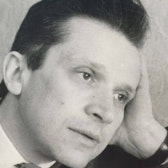
Mieczysław Weinberg, born in Poland into a Jewish family, fled before the German invasion in 1939 and spent most of his working life in the Soviet Union.
Historical Context
Weinberg was a friend and neighbor of Dmitri Shostakovich, who championed Weinberg's music, and Weinberg was only saved from the worst of the Stalin era by Stalin's death in 1953.