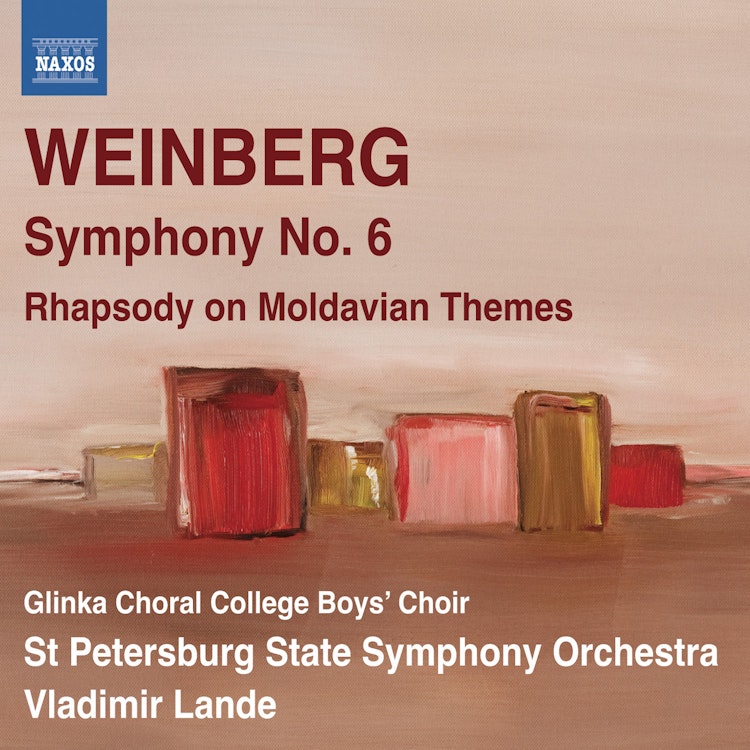
Weinberg: Symphony No. 6 - Rhapsody on Moldavian Themes
10/3/2012, 6 Tracks, 1:00:52
Featuring
Vladimir Lande
St. Petersburg State Symphony Orchestra
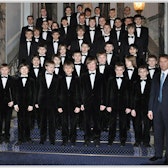
Glinka Choral College Boys' Choir
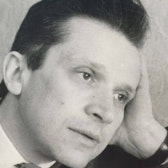
Mieczysław Weinberg
Did you know?
1/7
Composer Biography
Despite setbacks, including the execution of his father-in-law Solomon Mikhoels (a famous actor) and his own imprisonment, Weinberg built a reputation as a composer championed by leading Soviet musicians.
Composition History
Weinberg's Rhapsody on Moldavian Themes, Op. 47, No. 1, emerged during a period when Soviet composers were pressured to avoid 'formalist' music, and it uses folk sources from his mother's region of origin.
Compositional Technique
Weinberg's Symphony No. 6, Op. 79, is notable as the first of six of his symphonies to feature a prominent vocal component, specifically boys' voices.
Compositional Technique
The Sixth Symphony is not wholly choral; its lengthy first movement and strident third movement are purely orchestral, while the second, fourth, and fifth movements set texts by Lev Kvitko, Samuil Galkin, and Mikhail Lukonin, respectively.
Composer Biography
Mieczysław Weinberg, a Polish-born composer, fled to Minsk and then Tashkent during the Nazi occupation, eventually settling in Moscow after impressing Shostakovich with his First Symphony.
Performer Biography
The St Petersburg State Symphony Orchestra, established in 1967, has a policy of performing music of every epoch, genre, and style, with particular attention to living composers.
Performer Biography
The Glinka Choral College Boys' Choir, directed by Vasily Grachev, is one of Russia's oldest musical institutions and has been closely associated with the history of St Petersburg since 1703.