This recording of Mozart's Requiem uses a new instrumental clothing, which is a revised version of Süßmayr's completion by Franz Beyer, to correct perceived flaws and bring out Mozart's language.
Interpretation
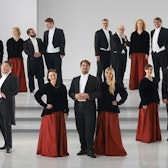
The Barockorchester Stuttgart, founded in 1985, specializes in 18th and early 19th-century music and performs exclusively on original instruments.
Critical Reception
Süßmayr's instrumental completion of Mozart's Requiem has been criticized as 'routine instrumentation' and has led to calls for alterations since its first publication.
Composition History
Mozart's Requiem was commissioned by Count von Walsegg-Stuppach, who intended to pass it off as his own composition to mark the anniversary of his wife's death.
Composition History
Mozart only fully completed the Introitus of the Requiem; other sections like the Kyrie to Hostias had voice parts with figured bass, and only the first eight bars of the Lacrimosa were present.
Compositional Technique
The fugue subject of the Osanna in the Requiem has always been attributed to Mozart, despite Süßmayr's completion of the Sanctus, Benedictus, and Agnus Dei movements.
Composition History
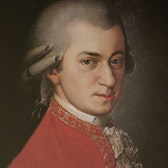
Mozart died before completing his Requiem; his widow, Konstanze, arranged for its completion by Franz Xaver Süßmayr, Mozart's pupil and copyist, due to financial difficulties.