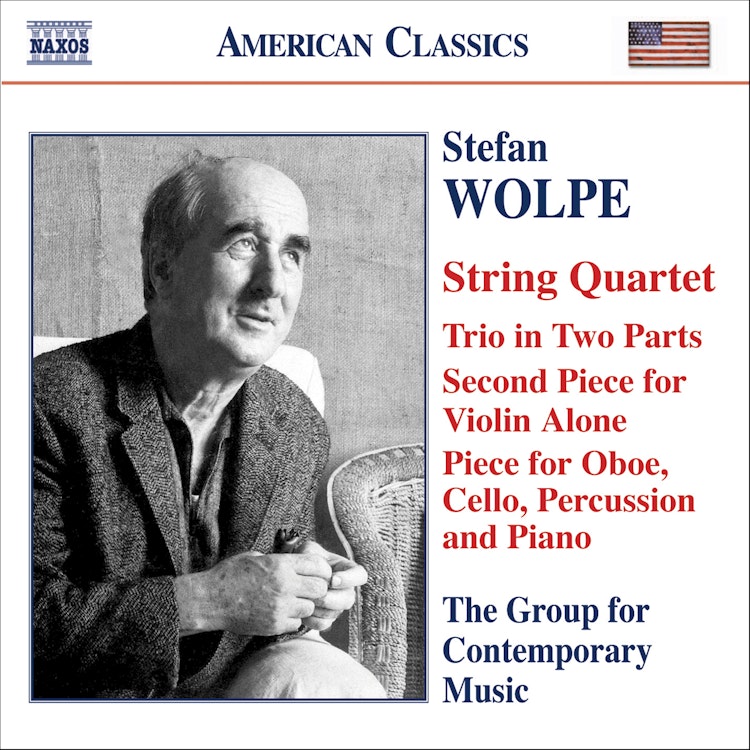
Wolpe: String Quartet / Second Piece for Violin Alone / Trio in 2 Parts / Oboe Quartet
1/21/2007, 9 Tracks, 1:01:49
Featuring
Curtis Macomber
Theodore Arm
Toby Appel
Fred Sherry
Harvey Sollberger
Charles Wuorinen
Stephen Taylor
Daniel Kennedy
Aleck Karis
Stefan Wolpe
Did you know?
1/7
Composer Biography
Stefan Wolpe, the composer, began a string quartet in 1950 but only completed it in 1968-69 during a brief remission from Parkinsonism, dedicating it belatedly to the Juilliard Quartet.
Compositional Technique
The Piece for Oboe, Cello, Percussion and Piano uses unconventional percussion instruments like biscuit tins, a kitchen grater, and rattles made from an aluminum pot and glass jar with nails.
Compositional Technique
Wolpe's late music, including the String Quartet and Trio, often features a two-part form, with the first part being introspective and stable, and the second part being more disruptive and rapid.
Composer's Artistic Vision
Stefan Wolpe, influenced by Taoism, rejected John Cage's concept of chance in music, believing composers should retain full responsibility for their choices.
Performer Biography
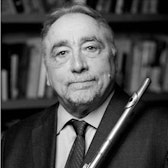
The Group for Contemporary Music, co-founded by flautist Harvey Sollberger and composer Charles Wuorinen, was recognized for redefining standards of performance for demanding contemporary composition.
Performer Biography
Cellist Fred Sherry is a pioneer in contemporary music, having introduced audiences worldwide to the music of his time through close associations with many prominent composers.
Composer's Artistic Vision
In his later years, Stefan Wolpe reconciled the disjunct nature of 'moment form' with the cohering tendencies of 'developing variation,' moving away from extensive charts for his compositions.