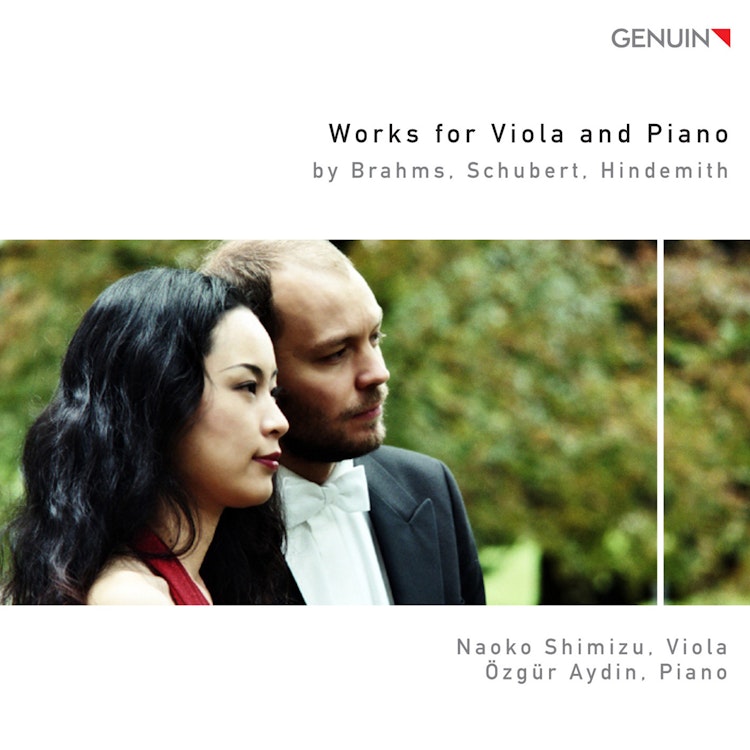
Works for Viola and Piano by Brahms, Schubert, Hindemith
6/7/2011, 9 Tracks, 1:02:26
Featuring
Naoko Shimizu
Özgür Aydin
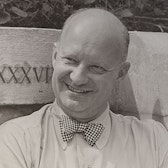
Paul Hindemith
Franz Schubert
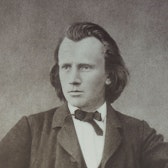
Johannes Brahms
Did you know?
1/7
Performer Biography
Naoko Shimizu, the violist on this album, was the first violist in 21 years to win First Prize at the ARD International Music Competition in Munich in 1997.
Instruments
Schubert's 'Arpeggione' Sonata was originally composed for the arpeggione, a six-string instrument invented in 1823 by J.G. Staufer, which combined qualities of a guitar and cello.
Composition History
Paul Hindemith's Sonata, Op. 11, No. 4, was presented at his first public 'Kompositionsabend' in Frankfurt in 1919, leading to an immediate offer from the Schott publishing company.
Composition History
Johannes Brahms's Sonata in E flat major, Op. 120 No. 2, was his last major instrumental work, inspired by his acquaintance with clarinetist Richard Mühlfeld after Brahms had considered retiring.
Composer Biography
Paul Hindemith, originally a violinist, turned to the viola after World War I and became a leading German viola virtuoso, helping the instrument gain prominence in the 20th century.
Composition History
For the first edition of Brahms's Op. 120 sonatas, the clarinet part was simultaneously arranged for viola to make the works more marketable due to their unusual instrumentation.
Historical Context
The viola has historically been overshadowed by the violin, often relegated to a middle-voice instrument with a limited solo repertoire.
You might also enjoy...
Viola Sonatas
Romantic Works for Viola & Piano
Milford: Chamber Music
Hindemith: Complete Sonatas, Vol. 2
Voila Viola!
Viola Recital: Strehle, Wilfried - Brahms, J. / Dvorak, A. / Hindemith, P.