Giovanni Zamboni, the composer, was a contrabass player at the Primaziale di Pisa from 1707 to 1713 and was known as a virtuoso on several instruments, including theorbo, lute, and harpsichord.
Composition History
Giovanni Zamboni's Sonate d'intavolatura di leuto, published in Lucca in 1718, are considered the last surviving lute tablatures, a form that was becoming obsolete.
Album & Artwork
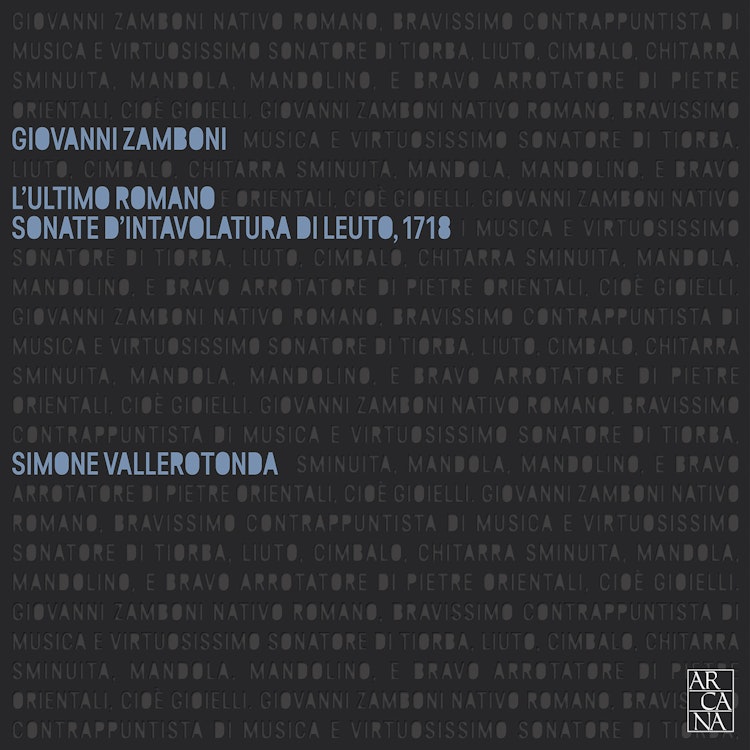
The album's graphic design was created in collaboration with 5+1AA Architecture Agency, whose work includes the Marseilles Docks where words transform a building's facade into art.
Recording & Production
To achieve an authentic Roman sound of the period, these sonatas were recorded at a pitch of 390 Hz, matching historical organs still in use in Rome, and played with gut and covered strings.
Compositional Technique
Zamboni's sonatas show influences of Arcangelo Corelli, a prominent Italian Baroque composer, in their melodic cantability and counterpoint, and also incorporate elements of the French style.
Interpretation
The performer, Simone Vallerotonda, deliberately chose to embellish repeated sections of the sonatas with variations, adhering to the Baroque aesthetic of ornamentation.
You might also enjoy...
Bach: Works for Lute, Vol. 2
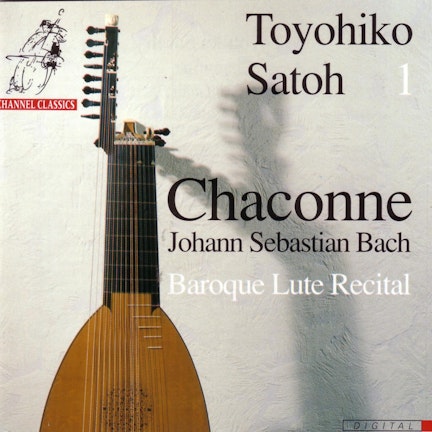
J.S. Bach: Chaconne - Baroque Lute Recital
Bach: Works for lute, Vol. 2
J.S. Bach Complete Lute Works and Other Transcriptions