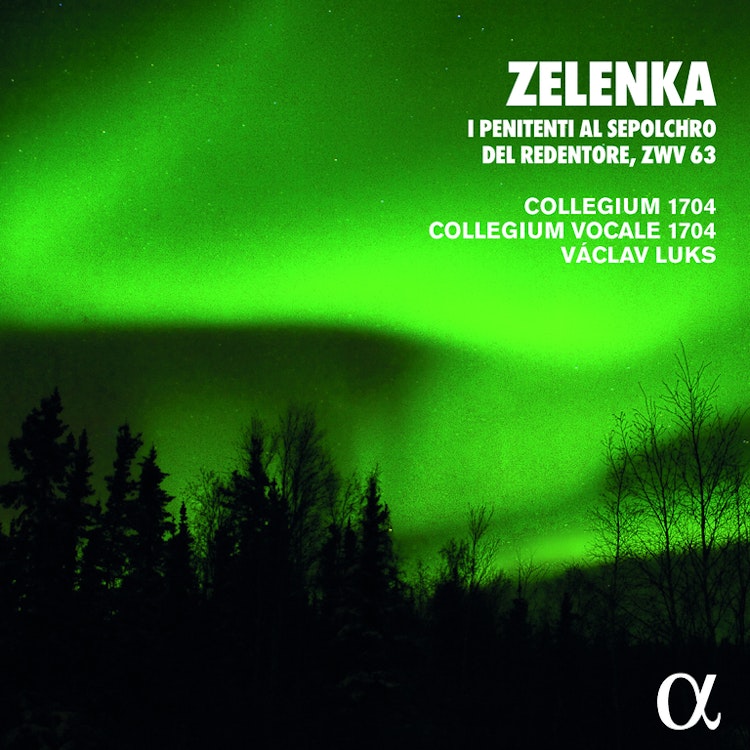
Zelenka: I penitenti al sepolchro del redentore, ZWV 63
6/18/2021, 13 Tracks, 1:11:40
Featuring
Václav Luks
Mariana Rewerski
Eric Stoklossa
Tobias Berndt
Collegium 1704
Collegium Vocale 1704
Jan Dismas Zelenka
Did you know?
1/6
Composer's Artistic Vision
A typical element of Zelenka's musical language is his desire to push the limits of what is 'possible' and his taste for experimentation.
Composition History
Zelenka's oratorio, I Penitenti al Sepolchro del Redentore, was first performed on Good Friday, March 30, 1736.
Composer Biography
Jan Dismas Zelenka, the composer, was a double bass player in the Dresden court orchestra when Archduchess Maria Josepha of Austria arrived.
Compositional Technique
The score of I Penitenti al Sepolchro del Redentore is highly virtuosic, featuring elements like lengthy legato passages, successive staccatos, and detailed dynamics, previously heard mainly in solo repertoire.
Historical Context
The arrival of Archduchess Maria Josepha of Austria in Dresden brought the spirit of southern European Catholic culture, rooted in Italian tradition, to the Saxon capital.
Composition History
The libretto for I Penitenti al Sepolchro del Redentore, by Stefano Benedetto Pallavicini, features an imaginary meeting between King David, Mary Magdalene, and St Peter, rather than a direct biblical story.
You might also enjoy...
Alessandro Scarlatti: Il Martirio di Santa Teodosia
Handel: Messiah Choruses
Handel: Messiah, HWV 56
Jauchzet, frohlocket (Ausschnitte aus dem Weihnachtsoratorium)