Bach's B-Minor Mass blends various styles, from the retrospective 'stile antico' to modern concerto types, and incorporates elements like Gregorian chant.
Composer's Artistic Vision
The B-Minor Mass is considered Bach's artistic testament, a summing-up of his entire life and a legacy to those who would follow him, representing the summa of his art.
Interpretation
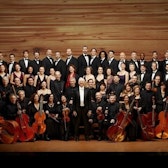
The performers on this recording use modest proportions for the orchestra and chorus, and the conductor's participation as a continuo player, to create a chamber music atmosphere.
Composition History
The full B-Minor Mass, as we know it today, was expanded after 1740 from the original 1733 Missa (Kyrie and Gloria) by adding three more parts: Symbolum Nicenum, Sanctus, and Osanna, Benedictus, Agnus Dei et Dona nobis pacem.
Composer Biography
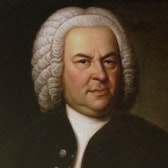
Though a Lutheran, Bach chose to compose a Latin Mass, a genre common to both Catholic and Lutheran confessions, making it acceptable to the Roman Catholic court in Dresden.
Composition History
Bach's B-Minor Mass was initially a Kyrie-Gloria Mass composed in 1733 as an homage to the new heir to the Dresden throne and a request for a court title.
Interpretation
William Christie, the conductor of this recording, performs as a continuo player (harpsichordist and organist) in nine of the twenty-six movements, rather than solely conducting.
You might also enjoy...
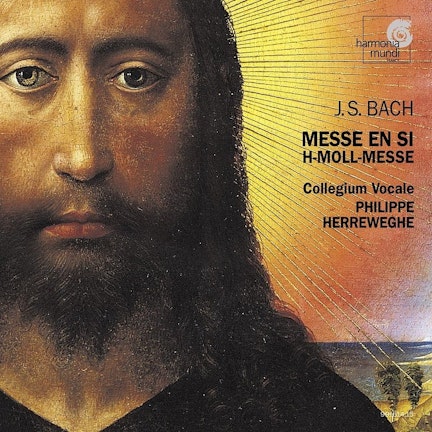
J.S. Bach: Mass in B Minor
J.S. Bach: Mass in B Minor (Breitkopf & Härtel Edition, edited by J. Rifkin, 2006)
Handel: Messiah, HWV 56
Heinrich Schütz.: Motets / German Magnificat (Dresden Kreuzchor, Mauersberger)
Bach: Mass in B Minor, BWV 232
Francesco Scarlatti: Dixit Dominus – Mass
J.S. Bach: Mass in F Major, BWV 233
J.S. Bach: Mass in G Minor, BWV 235
Alessandro Scarlatti: Il Martirio di Santa Teodosia
Pergolesi: Stabat Mater
Bach Mass in B Minor conducted by Hermann Scherchen
Zelenka: I penitenti al sepolchro del redentore, ZWV 63