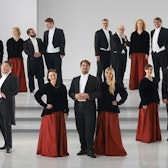
Zelenka: Missa Sancti Josephi; De Profundis; In Exitu Israel
9/28/2018, 22 Tracks, 57:50
Featuring
Daniel Taylor
Frieder Bernius
Jonathan Sells
Julia Lezhneva
Tilman Lichdi
Mathis Koch
Sönke Tams Freier
Barockorchester Stuttgart
Kammerchor Stuttgart
Jan Dismas Zelenka
Did you know?
1/7
Composition History
Zelenka's masses, along with those of his Dresden colleague Johann David Heinichen, influenced J. S. Bach's development of his own Mass in B minor.
Composition History
Zelenka performed Psalm 129 De profundis in Dresden on March 1, 1724, in memory of his recently deceased father, Jiří Zelenka, who was a cantor and organist.
Composer Biography
Jan Dismas Zelenka (1679-1745) was a double bass player and composer at the Dresden court, serving Augustus the Strong and his son Frederic Augustus II.
Compositional Technique
The Missa Sancti Josephi, like another of Zelenka's masses, omits the Credo because it is a mass for a saint, and the Credo text typically refers to the Father, Son, and Holy Spirit.
Composition History
The Missa Sancti Josephi was likely composed for Saint Joseph's Day on March 19, 1732, and performed for the name day of the Saxon princess Maria Josepha.
Compositional Technique
The Missa Sancti Josephi features an exceptionally large ensemble, deploying all the forces of the Dresden court orchestra, which was a world leader at the time.
Composition History
Zelenka's autograph score for the Missa Sancti Josephi, the only surviving source, was badly damaged by fire during the bombing of Dresden in February 1945, but has been reliably reconstructed.
You might also enjoy...
Zelenka: Missa Sancti Josephi, ZWV 14
Giovanni: Salmi da Vespro per il giorno di. S. Petronio
Mozart & Süssmayr: Requiem
Zuccari: Mass in C Minor & Magnificat in F Major
Helper and Protector: Italian Maestri in Poland
Lima & La Plata: Missions jésuites
Naumann: Zeit und Ewigkeit
Rink: Sacred Works
Johann Staden: Motetten
Leopold I: Sacred Works
Desmarets, H.: Grand Motets, Vol. 2 - De Profundis (Le Concert Spirituel)