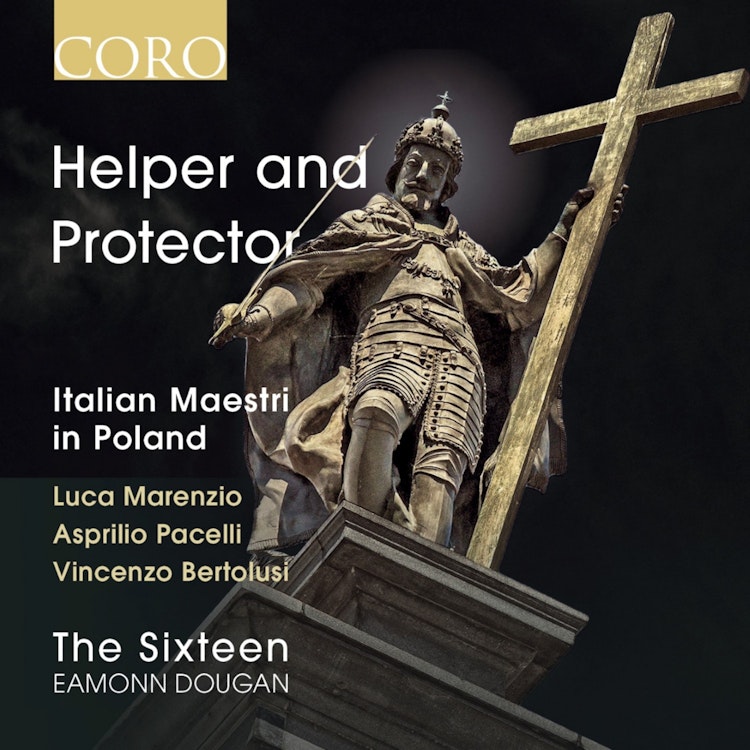
Luca Marenzio, a renowned composer of madrigals, led the 'Italian' ensemble at Sigismund III's court in Poland for about two and a half years, arriving in December 1595.
Historical Context
Sigismund III, raised Protestant, was a strong supporter of the Counter-Reformation and decided to bring in esteemed Italian musicians, particularly from Rome, to reorganise his music ensemble in 1594.
Composer's Artistic Vision
King Sigismund III particularly desired polychoral sacred works, believing that the rich sound of music performed by several choirs symbolised and enhanced his regal might.
Historical Context
The royal chapel of Sigismund III Vasa, who ruled the Polish-Lithuanian state from 1587 to 1632, became radically internationalised with Italian musicians.
Compositional Technique
The Missa super Iniquos odio habui by Luca Marenzio features an 'echo effect' where words are repeated by two choirs, a procedure noted by a master of ceremonies at its premiere.
Composition History
The complete Missa super Iniquos odio habui, including the Credo, Sanctus, and Agnus Dei, is recorded for the first time thanks to a 1602 copy from Silesia, which was rediscovered after being considered lost.
Composition History
Marenzio's Missa super Iniquos odio habui, based on his own eight-part motet, was almost certainly written in Warsaw and first performed on October 13, 1596, at the Collegiate Church of St John the Baptist.
You might also enjoy...
Sacred Music by Cantors of St. Thomas
G. Anerio: Requiem – F. Anerio: 6 Motets
H. Praetorius: Sacred Music for Double Chorus
Verhulst: Missa
Verdi: Requiem - Richard Blackford's Orchestration for Two Pianos, Organ and Percussion
Brahms: A German Requiem, Op. 45 (London Version)
Komitas: Sirt im sasani (Live)
Llibre Vermell De Montserrat
A Winter Triptych
Haas: Das Lebensbuch Gottes, Op. 87 (Live)
William Montillet: Messe Sainte Cécile - Quatre Motets - Messe "Tu es Pastor"