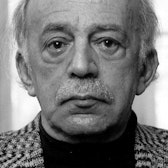
Zoltán Székely, a violinist and composer, was a pupil of Kodály and a close associate of Bartók, who dedicated his Second Rhapsody to Székely.
Instruments
Zoltán Székely, the violinist, played a 1718 'Michelangelo' Stradivarius, which he acquired in 1927.
Performer Biography
The original Hungarian String Quartet, known as the Waldbauer-Kerpely Quartet, formed in 1910 specifically to perform chamber music by Bartók, Weiner, and Kodály.
Compositional Technique
Bartók's Sixth Quartet, written during a period of personal and global distress, features a recurring 'Mesto' (sad) passage at the beginning of each of its four movements.
Performer Biography
The New Hungarian String Quartet (NHSQ) was formed in 1935 by four young graduates of the Ferenc Liszt Academy in Budapest.
Composition History
Bartók's Fifth Quartet became a calling card for the New Hungarian String Quartet after they secretly copied the score and offered to play it for Bartók, who then coached them and offered them the first Budapest performance.
Compositional Technique
Bartók's Fifth Quartet is in an arch form, a structure pioneered by Hindemith in his Op.22 and previously used by Bartók in his Fourth Quartet.