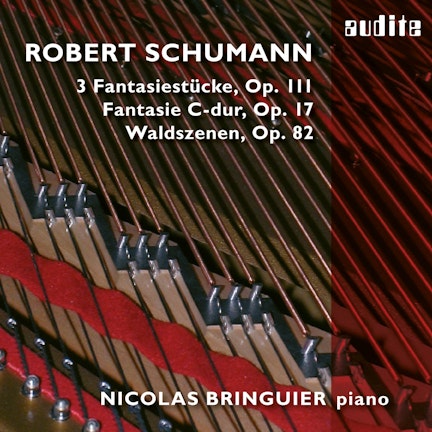
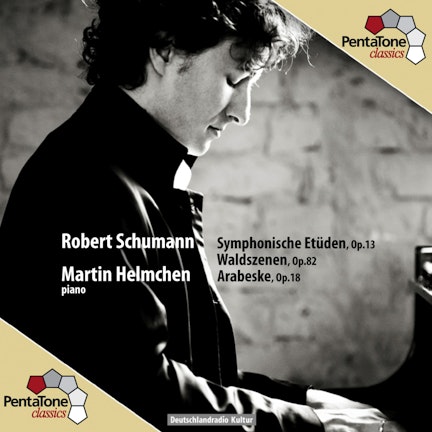
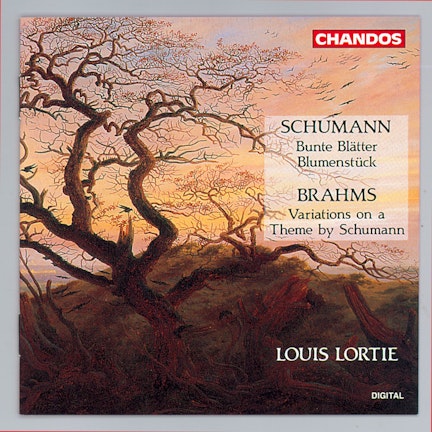
The piano used for this recording is a Steinway Model D, and its preparation and tuning were done by Francis Morin.
Recording & Production
This album was recorded in the Salle de Musique in La Chaux-de-Fonds, Switzerland, a venue inaugurated in 1955 and known for its extraordinary acoustics.
Compositional Technique
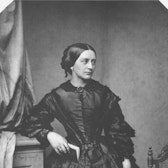
The five notes of the 'innere Stimme' in Humoreske are known as the 'Clara theme,' as they correspond to the five letters in his beloved Clara Schumann's name.
Composer Biography
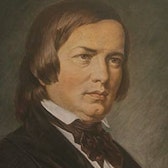
Robert Schumann, the composer, initially wanted to be a writer, but decided to dedicate himself to music in 1830.
Compositional Technique
In his Humoreske, Robert Schumann included an 'innere Stimme' (inner voice) on a third stave, which was not meant to be played but merely implied, representing a fractured identity.
Composer's Artistic Vision
Robert Schumann often used the word 'Humor' to describe not just amusement, but also a frame of mind or emotion, reflecting the subtle variations of mood in his music.
Album & Artwork
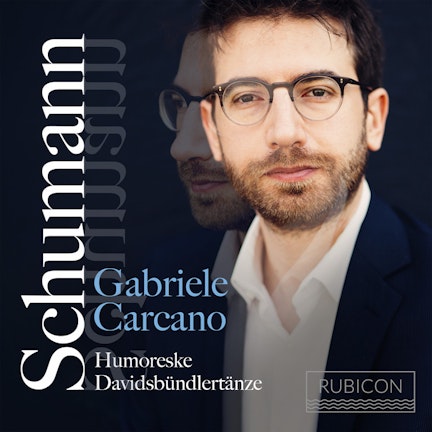
The album title, Zwielicht, means 'Twilight' and refers to the interplay of light and darkness in German Romanticism.