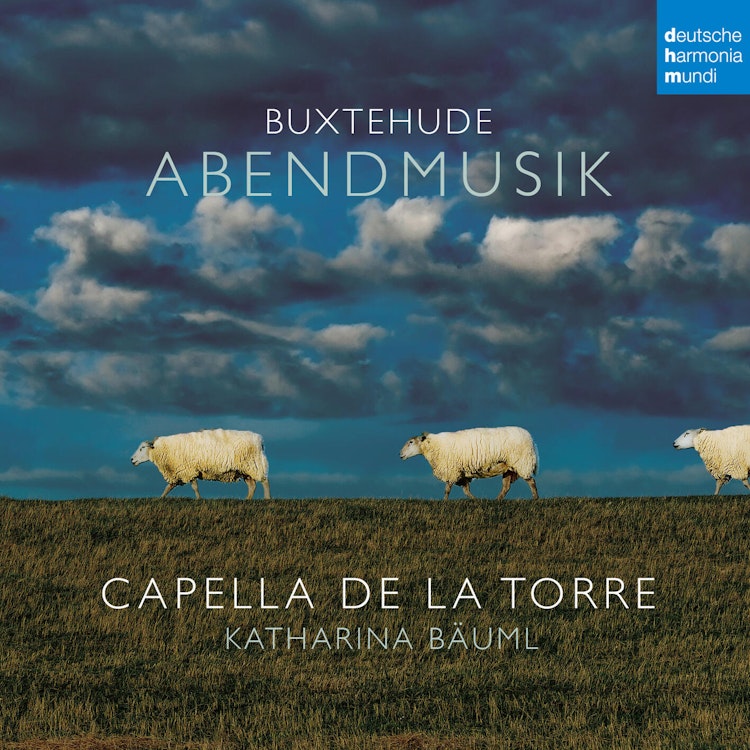
Abendmusik / Evening Music - Buxtehude, Tunder, Grabbe
11/22/2024, 20 Tracks, 1:18:21
Featuring
Florian Sievers
Isabel Schicketanz
Katharina Bäuml
Margaret Hunter
Martin Schicketanz
Martina Fiedler
Capella de la Torre
Dietrich Buxtehude
Nicolaus Bleyer
Johann Grabbe
Anonymous
Joachim Decker
Franz Tunder
Nathanael Schnittelbach
Did you know?
1/7
Composer Biography
Dieterich Buxtehude, the main composer on this album, shaped the musical life of Lübeck for almost four decades as organist at St Mary's Church.
Composition History
The Missa brevis (BuxWV 114) by Buxtehude is unique among his vocal works, written around 1675 in the polyphonic style of the 16th century.
Historical Context
Franz Tunder, Buxtehude's predecessor as organist at St Mary's, introduced the tradition of 'Abendmusiken' (evening concerts) to Lübeck, inspired by Dutch organists.
Compositional Technique
In several of his sacred works, Dieterich Buxtehude employed the popular 17th-century ostinato technique, where a constant harmonic model is repeated in the bass line.
Historical Context
Lübeck used Dieterich Buxtehude's 'world-famous' status and unique evening concerts as part of a marketing campaign for the city.
Recording & Production
This album is a co-production with Deutschlandfunk Kultur and was recorded in May 2023 at Emmauskirche Dresden-Kaditz.
Composer's Artistic Vision
Buxtehude's official duties did not require him to compose sacred vocal works, yet his surviving output contains significantly more vocal compositions than organ works.
You might also enjoy...
O Lux Beata Trinitas: Norddeutsche Kantaten
Weckmann: Sacred Works
Sacred Arias
J.M. Bach, G.C. Bach, J.C. Bach: Cantatas by members of the Bach family
Weckmann: Wie liegt die Stadt so wüste
Buxtehude: Cantates pour voix seule – Manuscrits d'Uppsala
Telemann: Zerschmettert Die Gotzen / Meine Rede Bleibt Betrubt / Dein Schade Ist Verzweifelt Bose
Georg Philipp Telemann: Die Donner-Ode
Easter Cantatas
Bach, W.F.: Cantatas, Vol. 2 - Fk. 64, 83, 85
Bruhns: Cantatas & Organ Works, Vol. 1
Georg Philipp Telemann: Inauguration Cantatas 1721