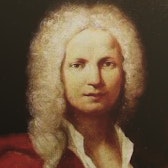
The two Vivaldi sonatas on this album are not original works but compilations of movements from different sources, a common practice during Vivaldi's time.
Composer Biography
Tomaso Albinoni, a composer featured on this album, was born into a high social position, allowing him to pursue music as a freelance musician without financial constraints.
Composition History
Albinoni, a composer on this album, composed up to two operas or intermezzos per season, some of which, like Pimpinone, were performed for up to 50 years.
Interpretation
The performers on this album chose a pure harpsichord accompaniment for the basso continuo, rather than the more common harpsichord and cello combination, to highlight the musical dialogue between melody and bass.
Critical Reception
Albinoni, like Vivaldi, fell into obscurity, and his 'rehabilitation' in the 20th century was ironically due to a famous 'arrangement' of his Adagio in G minor by Remo Giazotto, which was based on a fragment whose existence was never proven.
Composition History
Francesco Maria Veracini, another composer on this album, dedicated his Sonate a Violino, o Flauto solo, e Basso to the Saxon Crown Prince Friedrich August in 1716, hoping for an appointment at the Dresden court, which he received two years later.
Compositional Technique
One of Albinoni's sonatas, Sonata VI from Trattenimenti Armonici, Op. 6, was copied by Johann Sebastian Bach's pupil Heinrich Nicolaus Gerber, corrected by Bach, and used as teaching material.
You might also enjoy...
Anthology of the Recorder, Vol. 3
Corelli: La follia
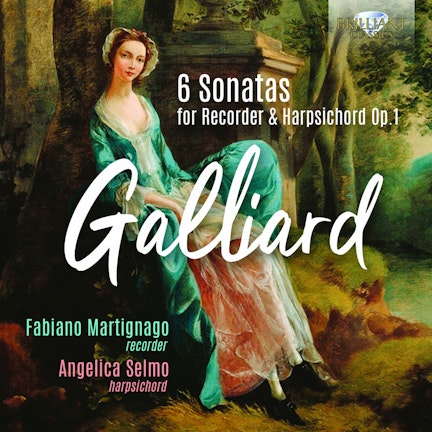
Galliard: 6 Sonatas for Recorder & Harpsichord, Op. 1