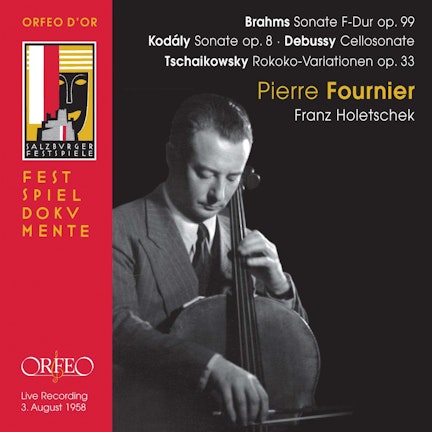
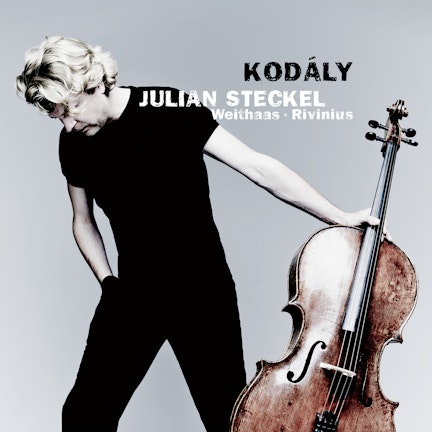
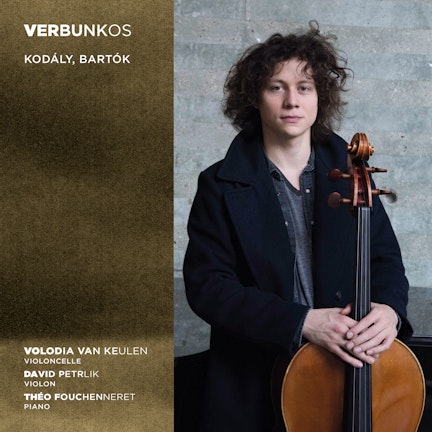
Zoltán Kodály's Sonata for Unaccompanied Cello op. 8 uses a technique called scordatura, where the cellist must alter the instrument's traditional tuning by lowering the two lower strings by a semitone.
Composer Biography
David Popper, the composer of the Fantasy on Little Russian Songs, was a virtuoso cellist trained at the Prague Conservatoire, who revolutionized the instrument's expression.
Performer Biography
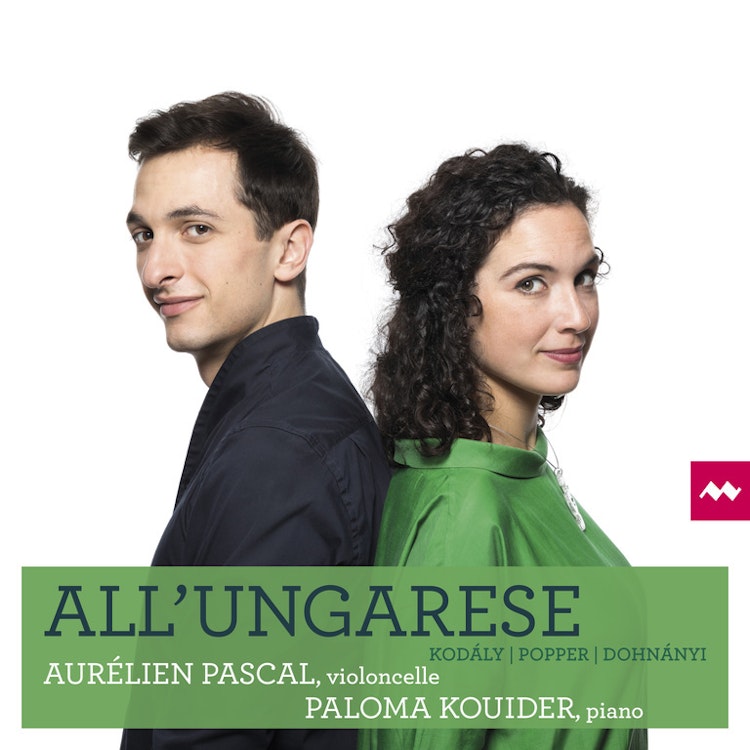
Aurélien Pascal, the cellist on this album, received guidance from the legendary cellist János Starker, who had studied with Kodály and was a leading performer of his works.
Composer's Artistic Vision
Kodály's Sonata for Unaccompanied Cello op. 8 incorporates many compositional techniques and instrumental colors derived from folk music, particularly in the third movement.
Composition History
Kodály's Sonata for Unaccompanied Cello op. 8 was composed in 1915 for Jenő Kerpely, one of David Popper's best pupils.
Historical Context
Many folk tunes in Dohnányi's Ruralia Hungarica came from research by his colleagues Béla Bartók and Zoltán Kodály, who recorded songs in Hungarian villages in the early 20th century.
Interpretation
Aurélien Pascal, the cellist, created a new transcription of Dohnányi's Ruralia Hungarica, adapting two fast movements originally for violin to the cello.