Kodály and Bartók were united by a common idea: to study Hungarian music at its roots, focusing on the repertoire of the rural population rather than urban entertainment bands.
Composer Biography
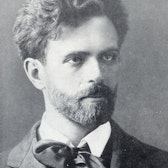
Zoltán Kodály, born in 1882, met Béla Bartók around 1905 while they were both studying at the Royal National Hungarian Academy of Music in Budapest.
Composer's Artistic Vision
Kodály saw folk music as a way to give his own compositions an unmistakable 'national' signature, using its unique tonal systems and rhythms.
Instruments
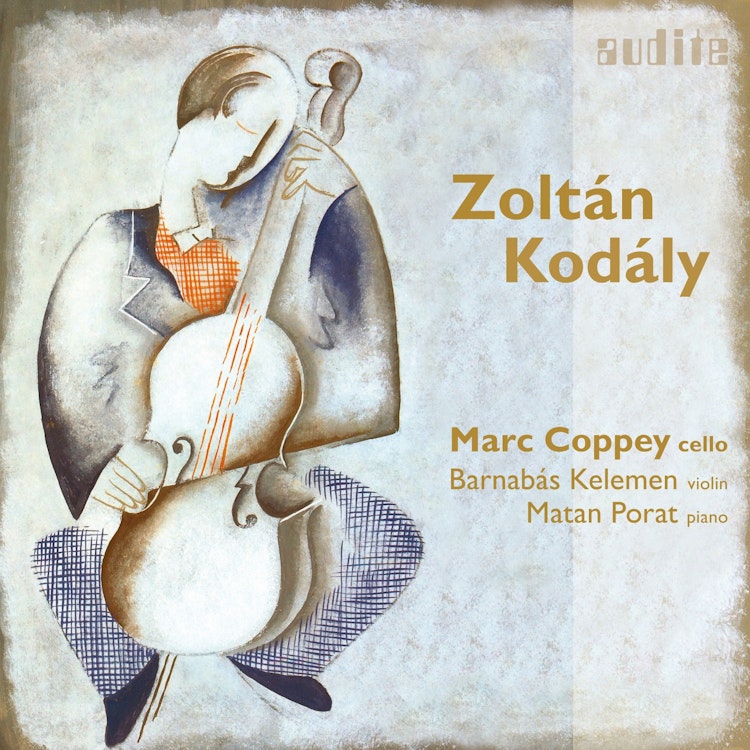
Marc Coppey performs on a rare cello by Matteo Goffriller from Venice, 1711, known as the 'Van Wilgenburg'.
Compositional Technique
In his Solo Cello Sonata, Op. 8, Kodály uses scordatura, altering the usual string tuning by lowering the two lower strings a semitone each, to B and F sharp, to better reach the central tonality.
Cultural Impact
Kodály's research into Hungarian folk music formed the basis for the 'Kodály method,' a pedagogical concept for anchoring music in general education schools, which is still unique in Europe.
Performer Biography
Marc Coppey, a cellist on this recording, won First Prize and 'Prize for the Best Bach Performance' at the prestigious Leipzig Bach Competition in 1988 at the age of 18.
You might also enjoy...
Mieczysław Weinberg: Cello Sonatas Nos. 1 & 2, Solo Cello Sonata No. 1 & String Trio
Between Nostalgia and Revolution
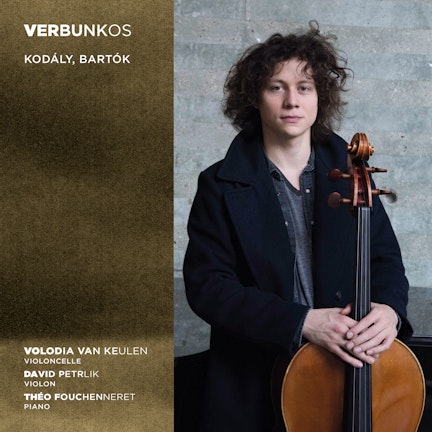
Verbunkos
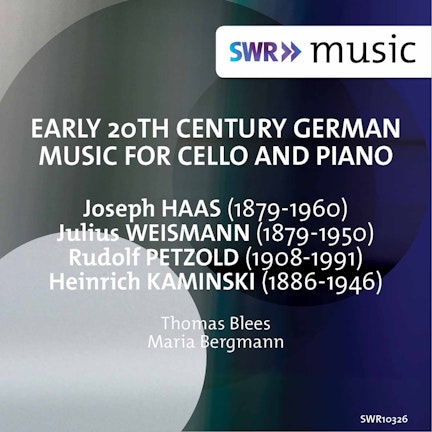
Early 20th Century German Music for Cello & Piano
A European Tribute to Erling Blöndal Bengtsson
Portrait of Yo-Yo Ma
Maria Bach: Chamber Works
Alexander von Zemlinsky: Maiblumen blühten überall, Two Pieces for String Quintet, Cello sonata
B. Tchaikovsky: Piano Trio, Cello Sonata & Solo Cello Suite
Koppel, H.D.: Composer and Pianist, Vol. 3 - Koppel, H.D.: Chamber Music (1956-1973)