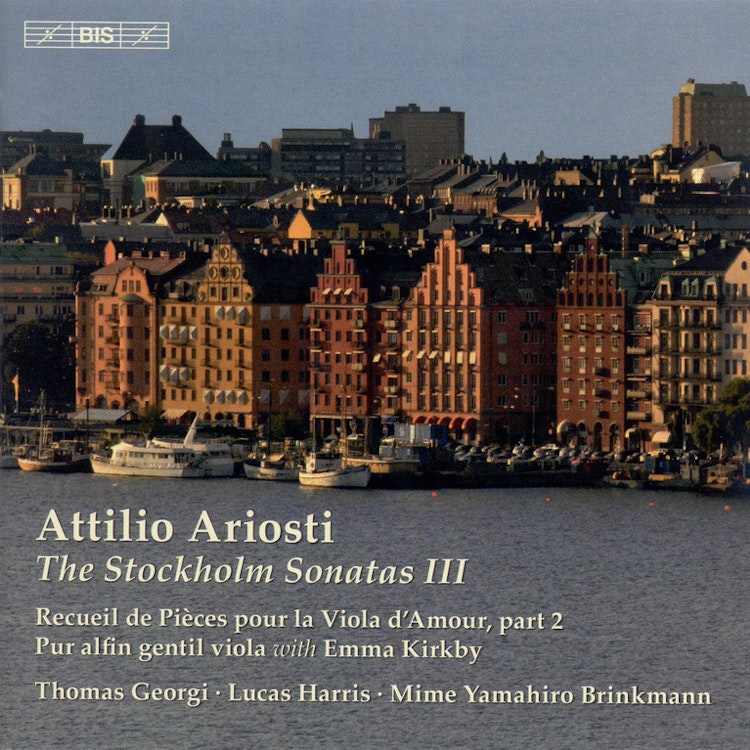
Ariosti, A.: Stockholm Sonatas for Viola D'Amore, Vol. 3
1/1/2010, 31 Tracks, 1:03:37
Featuring
Thomas Georgi
Lucas Harris
Mime Yamahiro-Brinkmann
Dame Emma Kirkby
Attilio Ariosti
Did you know?
1/7
Compositional Technique
Ariosti's harmonic boldness was admired, with Rameau in 1737 citing a passage from Ariosti's opera Coriolano as an outstanding example of enharmonic composition.
Composition History
The solos for viola d'amore on this album, part of 15 pieces in the Recueil de Pièces pour la Viol d'Amour, survive thanks to a young Swedish music student, Johan Helmich Roman, who copied them in London in the late 1710s.
Composer Biography
Attilio Ariosti, born in Bologna in 1666, was remembered by his contemporaries as a versatile artist who could sing, play organ, cello, and violin, and write both drama and music.
Cultural Impact
The viola d'amore, the instrument featured on this album, has appeared in various cultural works, including Bach's St John Passion, Janáček's Káťa Kabanová, two novels, and Hollywood productions like The Twilight Zone and The Simpsons.
Performer Biography
Emma Kirkby, a featured performer, initially had no professional singing ambitions, singing for pleasure in choirs and small groups while studying classics and working as a schoolteacher.
Compositional Technique
The cantata Pur alfin gentil viola features a "proto-classical moment" where the solo and bass lines engage in a conversation-like texture, with the bass imitating the solo's statement, departing from the typical High Baroque polarization of melody and harmonic bass.
Composer's Artistic Vision
Ariosti's fascination with the viola d'amore stemmed from the opportunity it offered him to "invent the instrument from scratch each time he wrote a new piece," constantly finding new possibilities.
You might also enjoy...
Archivo de Guatemala: Music from the Guatemala City Cathedral Archive
Mùsica en tiempos de Goya
Ruth Wilhelmine Meyer: One Voices
The Play of Daniel
Carlo Ferrari: Sei Sonate per Violoncello e Basso Continuo, Opera Prima
Pandolfi Mealli: Sonate à violino solo (Opera quarta)
Ruvo: 5 Sonatas for Violoncello & Basso continuo
Music in the world vol.2
Henze: El Cimarrón
Ariosti: Stockholm Sonatas for Viola D'Amore, Vol. 2