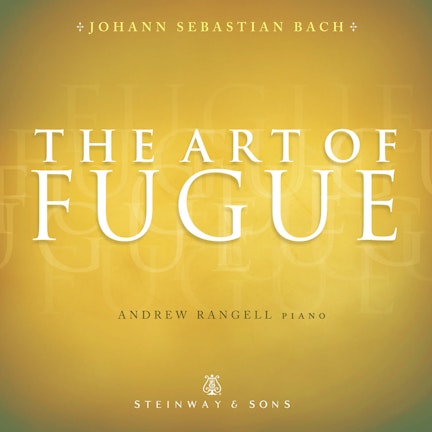
Bach's music, particularly The Art of Fugue, reflects the Baroque idea, defined by Leibniz, that God chose the most perfect world—simple in hypotheses and rich in phenomena.
Composer's Artistic Vision
For Bach, intellectual speculation, instrumental practice, and spiritual adventure were inseparable, and his works themselves embody both theory and practice.
Composition History
Bach's The Art of Fugue was likely begun around 1744 and its completion was interrupted by the composer's blindness in mid-1749.
Interpretation
While the work was originally considered for harpsichord or organ, the piano is now also considered a suitable instrument for performing The Art of Fugue.
Compositional Technique
Bach conceived The Art of Fugue as fourteen fugues, which he called 'counterpoints,' arranged in two groups of seven, increasing in complexity.
Performer Biography
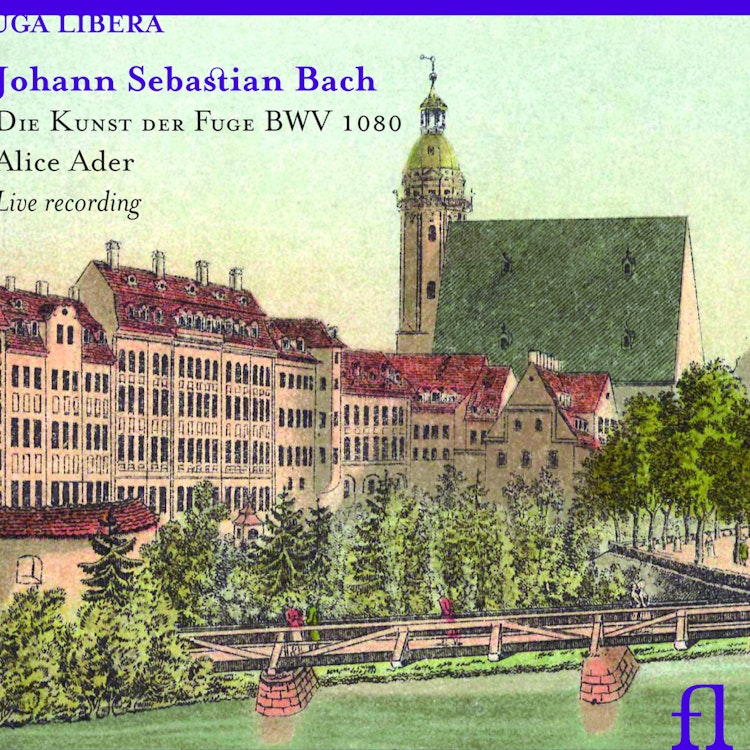
Alice Ader, the pianist on this recording, received a First Prize from the Paris Conservatory and has performed in prestigious venues across Europe.
Compositional Technique
In his final years, Bach used the number fourteen to 'sign' his works, as it is the sum of the letter rankings in his name (B=2, A=1, C=3, H=8).
You might also enjoy...
Bach: The Two and Three Part Inventions, BWV 772-801 - Gould Remastered
J.S. Bach - Goldberg Variations BWV. 988 - Alexander Gurning