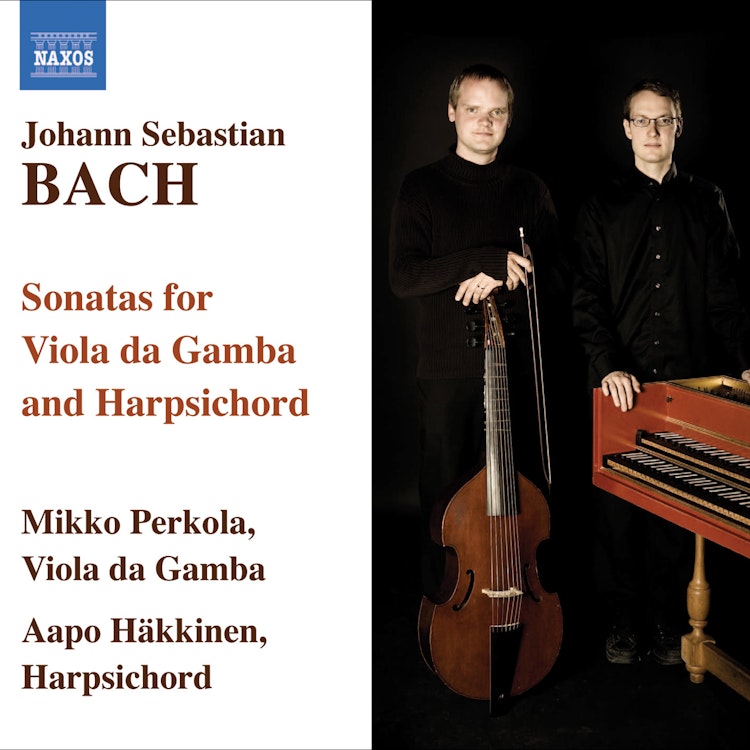
Bach, J.S.: Viola Da Gamba Sonatas, Bwv 1027-1029 / Trios
6/11/2008, 19 Tracks, 1:15:40
Featuring
Mikko Perkola
Aapo Häkkinen
Vernon Handley
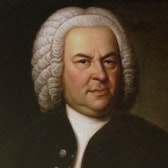
Johann Sebastian Bach
Did you know?
1/7
Composer's Artistic Vision
Bach's music represents the culmination of the Baroque era, synthesizing Italian melodic invention, French rhythmic dance forms, and German contrapuntal mastery.
Compositional Technique
The three Sonatas for Viola da Gamba and Harpsichord, BWV 1027-29, use a texture common in Bach's instrumental sonatas, with two upper parts supported by a bass part, similar to his organ Trio Sonatas.
Composition History
Bach composed instrumental music, including the works on this album, during his time as Kapellmeister at Anhalt-Cöthen, where the court's Pietist leanings made church music unnecessary.
Composer Biography
Johann Sebastian Bach came from a family of musicians, and his sons continued this tradition, laying the groundwork for a new musical style in the late 18th century.
Composition History
The Sonata in D major, BWV 963, includes a movement titled "Thema all'imitatio Gallina Cuccu" (Theme in Imitation of the Hen and Cuckoo), a fugue where the hen provides the subject and the cuckoo's notes are heard later.
Instruments
The viola da gamba used in this recording was made by Guy Harrison in Toronto in 1998, modeled after an instrument by Michel Colichon from Paris, 1691.
Instruments
The harpsichord featured on this recording was built by Joel Katzman in Amsterdam in 2002, based on a design by Pascal Taskin from Paris, 1769.
You might also enjoy...
J.S. Bach: Gamba Sonatas
Bach: Sonatas for Viola da Gamba and Harpsichord
J.S. Bach: Works for Cello & Harpsichord (Live)
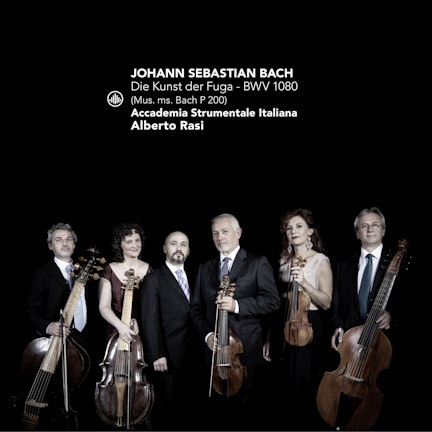
Die Kunst der Fuga, BWV 1080 (Mus. Ms. Bach P 200)
Bach: Die Kunst der Fuge
Guido: The four seasons
Bach: Viola da gamba Sonata BWV 1027-1029
Bach: Musical Offering, BWV 1079
J.S. Bach: Viola da gamba Sonatas, BWVV 1027-1029
Bach: The Musical Offering
Bach: Musical Offering
Bonporti: Inventions for Violin, Op. 10, Vol. 1
J.S. Bach: The Art of Fugue
Alfonso Ferrabosco II: Complete Music for Solo Lyra Viol