The recording project originated from a multi-year exploration of articulation markings in Bach's works, leading to an approach emphasizing the independence of musical parts.
Interpretation
The performers aim for an "authentic" performance by making the music come alive from the page, focusing on the rhetorical nature of the music rather than exactitude.
Performer Biography
Laura Vaughan, the viola da gamba specialist, is a dynamic member of Australia's early music scene and is one of the few exponents of the rare lirone.
Recording & Production
This recording aims to capture a virtual concert in digital form, sharing the performers' musical journey with listeners far from their Southern Hemisphere context.
Compositional Technique
Bach's gamba sonatas combine formal counterpoint, homophonic galant flamboyance, French ornamentation, and Italian embellishment traditions into fresh, modern compositions.
Composer Biography
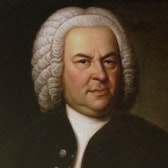
Johann Sebastian Bach, the composer, was active in composing and performing chamber music and works for clavier and organ during his Leipzig years (1723-1750).
Instruments
Bach's sonatas for a bass instrument and harpsichord were written for the viola da gamba, an instrument that was trending towards obsolescence at the time.
You might also enjoy...
Bach, J.S.: Viola Da Gamba Sonatas, Bwv 1027-1029 / Trios
Bach: Sonatas for Viola da Gamba and Harpsichord
J.S. Bach: Gamba Sonatas
J.S. Bach: Works for Cello & Harpsichord (Live)
J.S. Bach: Musikalisches Opfer
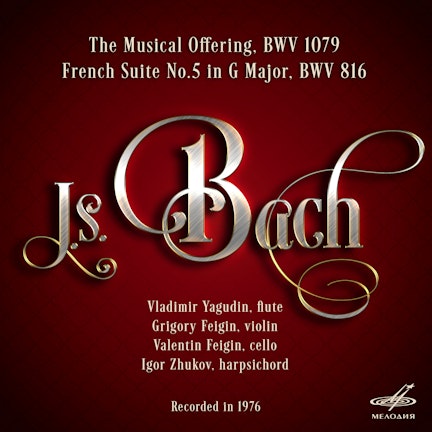
Bach: Musical Offering & French Suite No. 5
J.S. Bach: Sonatas for Viola da Gamba & Harpsichord
Yo-Yo Ma Plays Bach
Bach, J.S.: Viola Da Gamba Sonatas, Bwv 1027-1029 / English Suite No. 2 / Prelude, Fugue and Allegro in E-Flat Major
Bach: Sonatas for Viola Da Gamba
J.S. Bach: 3 Sonaten für Cembalo und Viola da Gamba