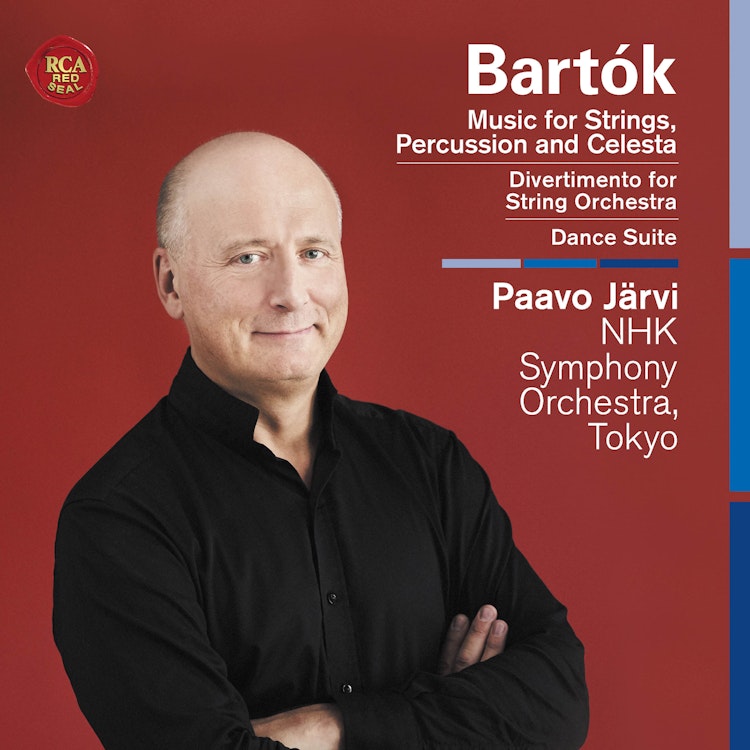
Bartók: Music for Strings, Percussion and Celesta, Divertimento for String Orchestra, Dance Suite
2/7/2020, 13 Tracks, 1:12:39
Featuring
Paavo Järvi
NHK Symphony Orchestra
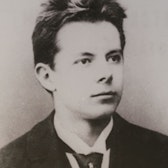
Béla Bartók
Did you know?
1/7
Composition History
Bartók wrote the Divertimento for String Orchestra in just two weeks in 1939 while a guest of Swiss conductor and patron Paul Sacher, who had also commissioned his Music for Strings, Percussion and Celesta.
Performer Biography
Paavo Järvi, the conductor, was born and studied in Tallinn, Estonia, until his family relocated to the United States in 1980, where he studied with Leonard Bernstein.
Composition History
Bartók composed the Dance Suite in 1923 for national celebrations marking the 50th anniversary of Budapest's unification from three independent towns.
Composer's Artistic Vision
Béla Bartók, a major voice in 20th-century music, deeply rooted his innovative compositions in the folklore and 'Hungarian' elements of his people.
Composer's Artistic Vision
Bartók's core artistic idea was the 'brotherhood of peoples,' which he served in his music by embracing influences from Slovakian, Romanian, Arabic, or any other clean, fresh, and healthy source.
Compositional Technique
The Dance Suite, though technically demanding to perform, is rhythmically complex, requiring familiarity with Hungarian rhythmic patterns.
Compositional Technique
Music for Strings, Percussion and Celesta is a pioneering work scored for two string orchestras seated in a circle, several percussion sets, harp, and celesta.
You might also enjoy...
Bartok Triptych
Bartok: Music for Strings, Percussion and Celesta / Divertimento
Bartók & Kodály
Fiddler's Spring
Bartok: Divertimento for Strings / Janacek: Idyll / Suite for String Orchestra