Bartók's compositional ideal was to avoid repeating a musical idea unchanged, ensuring no detail was presented exactly the same way twice.
Interpretation
Tanja Becker-Bender, the violinist on this album, explains that Bartók treats the violin in all its facets, including recitation-singing and bowing techniques typical of folk musicians, such as 'col legno battuto'.
Composer's Artistic Vision
Around 1905, Bartók was deeply impressed by Magyar peasant music, which he systematically collected from Hungary, Romania, and other countries, finding it 'simple, frequently rough, but never stupid'.
Composer Biography
Bartók fled to the USA at the end of 1940 to escape the Nazi regime threatening his homeland, and his extensive Sonata for Solo Violin premiered in New York in 1944.
Recording & Production
For this recording, violinist Tanja Becker-Bender plays the urtext version of the Solo Violin Sonata, edited by Boosey & Hawkes, and gained additional insights from the original manuscript.
Composer Biography
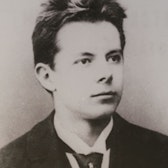
Béla Bartók, born in Nagyszentmiklós (now Sânnicolau Mare in Romania), was described by Swiss conductor Paul Sacher as having the outward appearance of a delicate, sensitive scholar.
Compositional Technique
Bartók's personal style, based on Hungarian peasant music, includes a reduction of musical means, a preference for polyphony, irregular rhythms, and the use of modal scales, pentatonic scales, and bitonality.