The recording uses several historical keyboard instruments, including a Tangent Piano by Christoph Friedrich Schmahl (1790), a Fortepiano by Michael Rosenberger (1805-1810), a Fortepiano by Conrad Graf (1827/28), and an Orphica (after 1800).
Historical Context
In Beethoven's time, there was a wide variety of keyboard instruments, each with different timbres and volumes, allowing for nuanced performances that are not possible on modern pianos.
Performer Biography
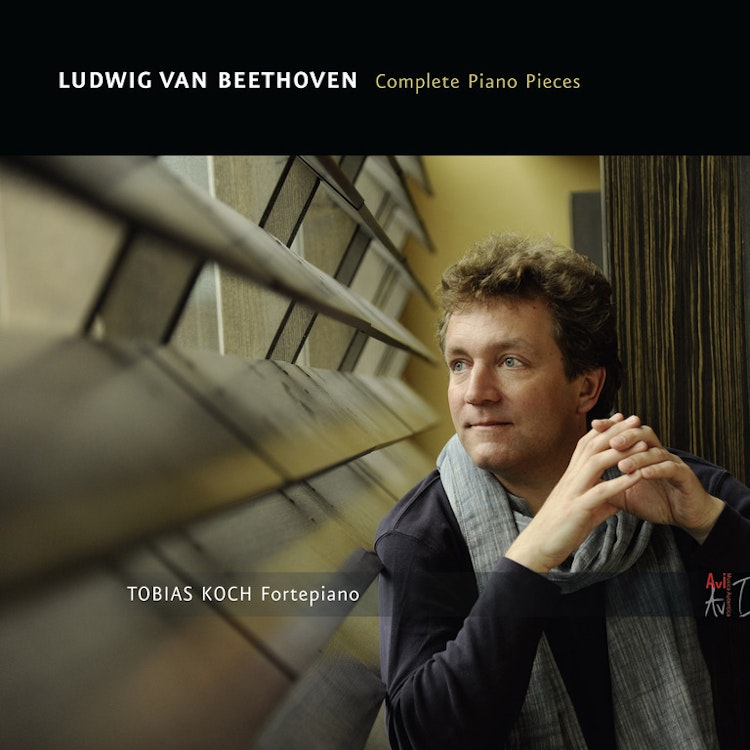
Tobias Koch, the performer on this album, is known for his versatile approach to historical keyboard instruments, playing harpsichord, clavichord, tangent piano, fortepiano, orphica, organ, and romantic grand piano.
Interpretation
This album features Beethoven's complete piano pieces, excluding sonatas, variations, and dances, and includes some sketches and fragments.
Composer's Artistic Vision
Beethoven often experimented with brief forms, such as bagatelles, to convey specific ideas or momentary expressions, sometimes even describing them as 'trifles' without deprecation.
Instruments
The Orphica, a portable fortepiano with a harp-like frame, was designed to imitate the sound of a lute and was exclusively made in Vienna, with very few examples surviving today.
Composition History
Some of Beethoven's piano pieces, like the Rondo a capriccio in G Major and the Bagatelle 'Für Elise', gained popularity due to historically incorrect titles added by later publishers or editors.
You might also enjoy...
Beethoven: Complete Piano Pieces
Beethoven 4 Kids, Vol. 2
Beethoven : Hammerklavier
Janos Solyom plays Beethoven
A Bouquet of Beethoven
Beethoven - Beautiful Encounter
Beethoven: Piano Sonatas Nos. 21 & 30; Andante favori