Beethoven's 'Bagatelles' were not considered minor works by the composer; he referred to his Op. 126 as 'some of which are more elaborate and probably the best ones I have yet composed in this genre'.
Historical Context
In Beethoven's time, there was a wide variety of keyboard instruments, each with different timbres and volumes, unlike the singular concept of 'the piano' today.
Instruments
The album also features an Orphica, a portable fortepiano from Vienna (after 1800) designed to imitate the sound of a lute, with very few specimens surviving today.
Interpretation
This album features Beethoven's complete piano pieces, excluding sonatas, variations, and dances, and includes sketches and fragments.
Cultural Impact
Some of Beethoven's piano pieces gained popularity through historically incorrect titles, such as 'The Rage over the Lost Penny' for the Rondo a capriccio in G Major, and 'Für Elise' for the Bagatelle in A Minor.
Interpretation
Pianist Tobias Koch performs exclusively on authentic period instruments, including harpsichord, clavichord, tangent piano, early fortepiano, and orphica.
Instruments
The recording uses a Tangent Piano by Christoph Friedrich Schmahl from 1790, which uses wooden slips instead of hammers to strike the strings, creating a unique sound.
You might also enjoy...
Beethoven: Complete Piano Pieces
Beethoven: Bagatelles Opp.33, 119 & 126; Für Elise; Rondo in C; Allegretto in C minor; Klavierstück in B flat
Beethoven: Moonlight Sonata & Other Piano Music
Beethoven: Complete Works for Solo Piano, Vol. 10
Beethoven: Piano Music, Vol. 4
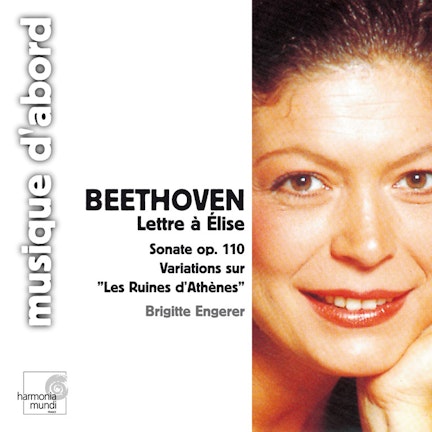
Beethoven: Lettre à Elise
Mondschein
Beethoven: Complete Piano Works, Vol. 13
Beethoven: Works Played On Beethoven's Broadwood Piano at the Hungarian National Museum