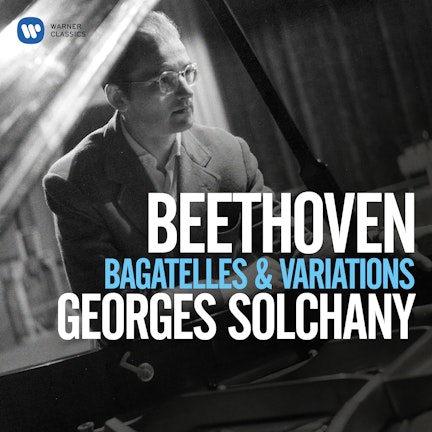
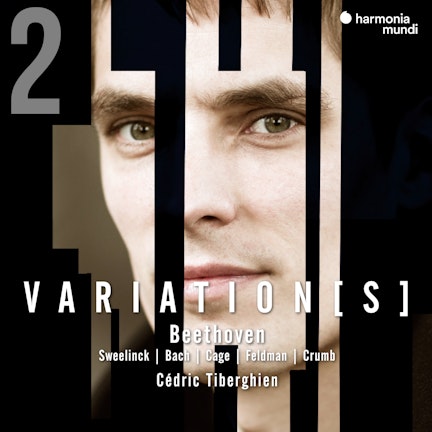
Beethoven composed the Six Variations on Nel cor più non mi sento (WoO 70) in one night for an unknown lady who had expressed her love for the duet and lost another composer's variations on it.
Historical Context
Beethoven's grandfather and father both worked as musicians at the Bonn court of the Prince-elector and Archbishop Maximilian Friedrich.
Compositional Technique
The Righini variations (WoO 65) are considered Beethoven's first masterpiece and contain many characteristics typical of his mature style, such as off-beat accents, motivic trills, and canonic elements.
Composer Biography
Beethoven's teacher, Christian Gottlob Neefe, described him in 1783 as a "boy of eleven years of age [he was in fact twelve] of most promising talent" who played the clavier skillfully.
Instruments
The fortepiano used on this recording was made by Paul McNulty in 2008, modeled after an instrument from around 1805 by Anton Walter, who was praised by Mozart and Beethoven.
Composer Biography
Beethoven played the viola in the court orchestra in Bonn and, as an assistant to his teacher Neefe, led rehearsals from about age thirteen.
Composer's Artistic Vision
Beethoven's Righini variations (WoO 65) are among his first works to display his unique talent for musical irony, often interrupting a mood rudely to question the value of what was just heard.
You might also enjoy...
Beethoven: Diabelli Variations, Op. 120
Beethoven: Piano Works
Beethoven, L. Van: Piano Sonata No. 15, "Pastoral" / 6 Variations, Op. 34 / Eroica Variations