The Quartetto di Cremona, the performers on this album, combines Italian string playing culture with historical performance practice, and is often considered a successor to the famous Quartetto Italiano.
Composition History
Beethoven's String Quartets Op. 18 were commissioned by Prince Franz Joseph Lobkowicz, who paid a generous fee of 400 guilders for the six works.
Composer Biography
Beethoven's later years, from 1815, were marked by illness, financial worries, depression, and a legal battle for the guardianship of his nephew Karl, coinciding with the development of his 'wondrous late style'.
Compositional Technique
Beethoven's String Quartet Op. 131, one of his most meticulously crafted pieces, features seven sections connected attacca, abandoning the classical four-movement form.
Interpretation
The Quartetto di Cremona's musical style is influenced by two distinct teaching philosophies: the intuitive, emotional 'Italian' approach of Piero Farulli and the clear, classical 'German-Austrian' style of Hatto Beyerle, focusing on faithfulness to the original.
Composer's Artistic Vision
Towards the end of his life, Beethoven was less concerned with pleasing an audience or the publishing market, leading to an 'anticipatory modernity' and an 'archaic streak' in his late works.
Instruments
The Quartetto di Cremona performs on notable instruments for this recording, including a 1640 N. Amati violin, a 1750 P. Antonio Testore violin, a 1952 A. Poggi viola, and a 1974 Marino Capicchioni cello.
You might also enjoy...
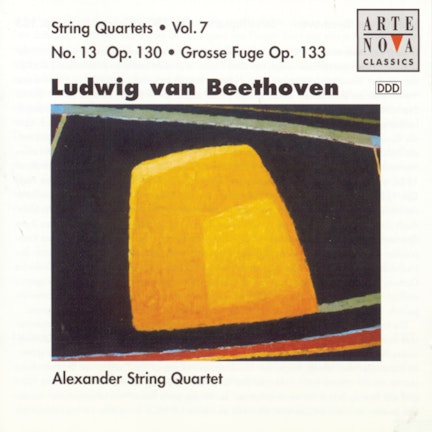
Beethoven: String Quartets Vol. 7
Beethoven String Quartets Op.130 si bémol majeur & Op.133 (Grande Fugue)
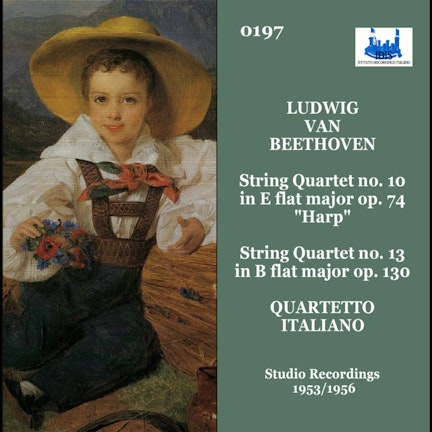
Ludwig van Beethoven & Quartetto Italiano
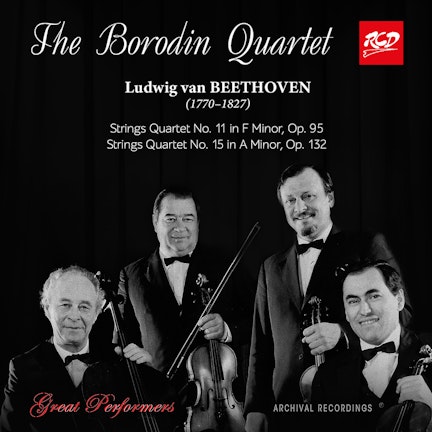
The Borodin Quartet Plays Beethoven: String Quartet No. 11, Op. 95 / String Quartet No. 15, Op. 132