The 'Gassenhauer' Trio, Op. 11, gets its nickname from a popular tune by Joseph Weigl (a successful Viennese opera composer) that Beethoven used for the finale's variations.
Performer Biography
The Swiss Piano Trio has received numerous awards for their complete recordings of piano trios by Mendelssohn, Tchaikovsky, and Robert and Clara Schumann.
Recording & Production
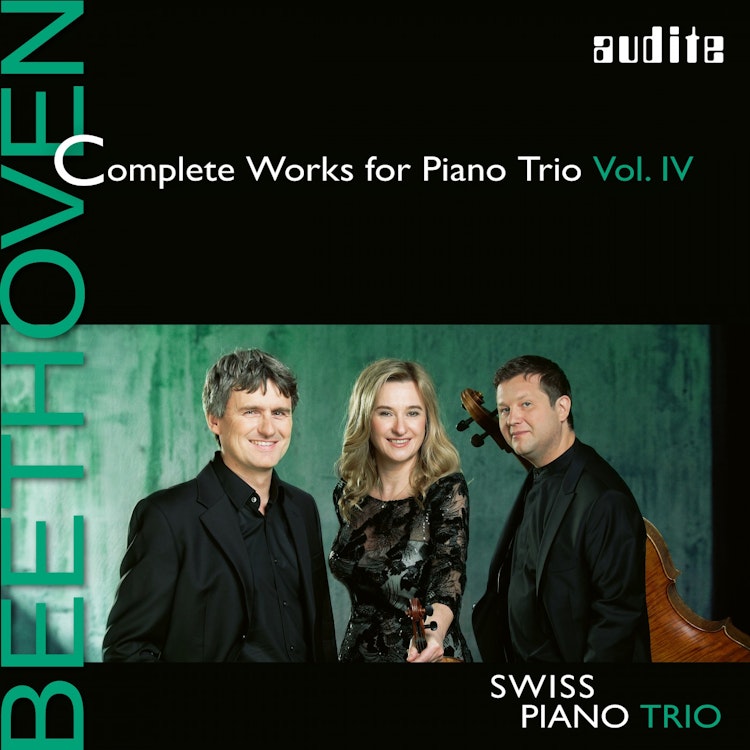
This album is the fourth installment in the Swiss Piano Trio's five-part series of Beethoven's complete piano trios, combining early and later works.
Composition History
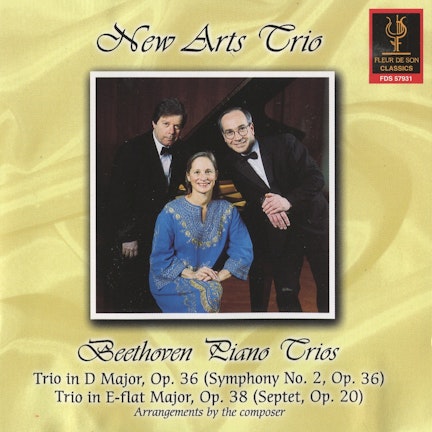
Beethoven's Piano Trio in E-flat major, Op. 38, is an arrangement of his earlier Septet for Strings and Winds, Op. 20, which was premiered with his First Symphony.
Composer Biography
Beethoven's Allegretto in E-flat major, Hess 48, was likely written around 1790 for the social enjoyment of the Zehrgarten club, a meeting place for artists and intellectuals in Bonn.
Interpretation
The Swiss Piano Trio uses Carl Czerny's (Beethoven's pupil and friend) 'Reminiscences of Beethoven' as an inspiring source for interpreting Beethoven's piano trios.
Composer's Artistic Vision
Beethoven's statement, "I cannot write anything not obligato for I came into this world with an obligato accompaniment," reveals his vision of self-sufficient, equally important musical voices.
You might also enjoy...
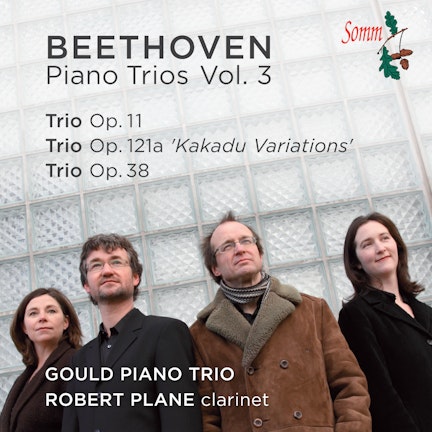
Beethoven: The Complete Piano Trios, Vol. 3
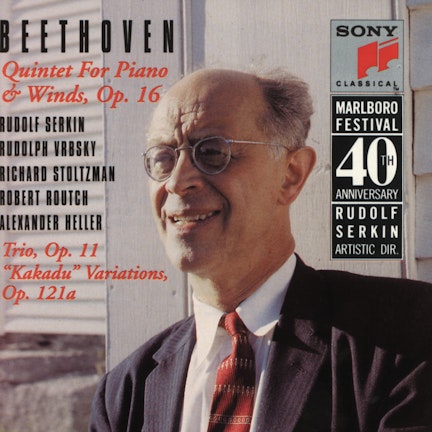
Piano Trio, Op. 11; Quintet for Piano and Winds; Kakadu Variations