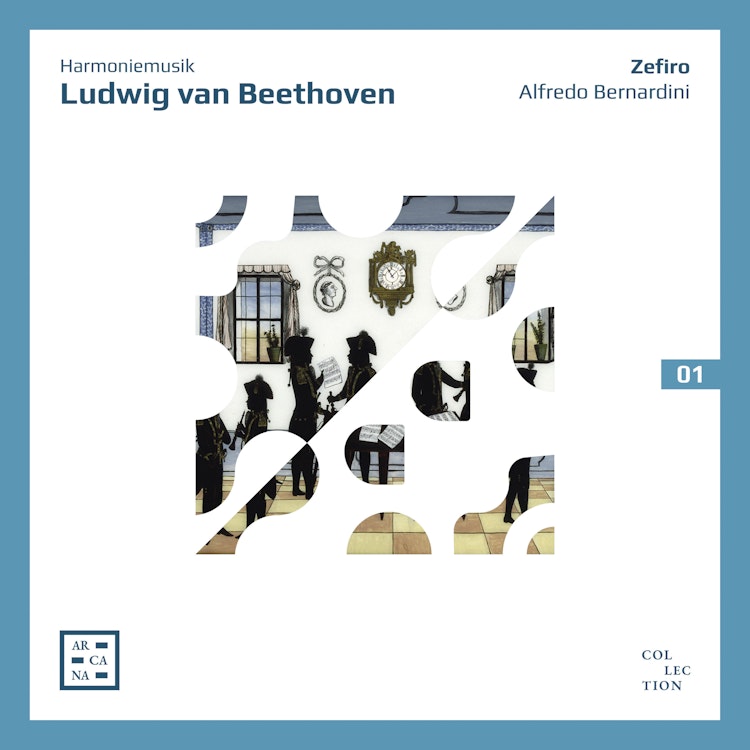
For this recording, mutes for natural horns were specially reconstructed based on a detailed description from Eduard Bernsdorf's Universal-Lexikon der Tonkunst (1856), as no original mutes have been found.
Composition History
Joseph Haydn, Beethoven's teacher, wrote to Elector Maximilian Franz in 1793, recommending Beethoven's compositions and requesting continued financial support for his studies in Vienna.
Instruments
The Rondo WoO 25 features experimental use of the horn, including echo effects 'con sordino' (with mute), which was a new invention by horn virtuoso Carl Türrschmidt in 1795.
Historical Context
Elector Maximilian Franz doubted Beethoven's progress in Vienna, noting that some of the music Haydn sent had been composed in Bonn before Beethoven's second trip, and suggested Beethoven return to his service.
Compositional Technique
Beethoven's Parthia (Octet op. 103), likely his earliest piece for wind ensemble, demonstrates his skill in using wind instruments, pushing articulation and dynamic differences to the extreme.
Historical Context
Beethoven's military music, such as the March in C major WoO 20, uses the scoring of 'janissary' or 'Turkish' music, which was a popular genre in Vienna featuring specific percussion instruments like the Turkish crescent.
You might also enjoy...
Beethoven: Septet & Sextet
Beethoven: Septet in E flat/Sextet in E flat
Beethoven: Chamber Music for Winds, Vol. 3
Beethoven: Septet, Op. 20; Sextet, Op. 71
Beethoven: Septet, Op. 20, Gassenhauer-Trio
BEETHOVEN / WRANITZKY: Oboe Trios
Beethoven: Wind Music. Marches for Military Band, Wind Octet, Op. 103 & Wind Sextet, Op. 71