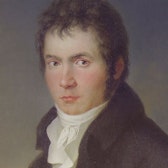
Beethoven, a musician, was in the process of going deaf when he composed the 'Sonata grande' (Opus 53), making heroism in the face of adversity a vital necessity for him.
Performer Biography
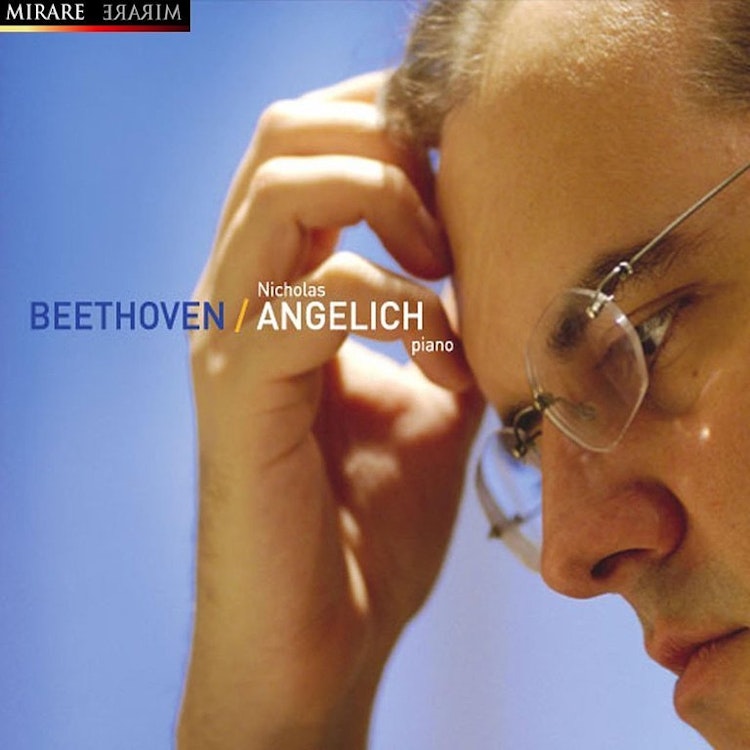
Pianist Nicholas Angelich achieved an overwhelming purity of sound and was recognized with the Young Talent prize of the Ruhr Klavierfestival, under the patronage of Leon Fleisher.
Compositional Technique
Beethoven's Sonata No. 12 (Opus 26) incorporates a 'funeral march,' a genre exalted during the French Revolution, transforming an intimate genre into revolutionary music.
Composer's Artistic Vision
Beethoven's Sonata No. 32 (Opus 111), his last sonata, was conceived not in a spirit of combat but of grace, aiming to elevate the listener's mind and heart to experience eternity.
Recording & Production
This recording was made in the auditorium of the Maison de la Culture de Grenoble in January 2005, featuring a Steinway piano provided by Auday Musiques.
Composer's Artistic Vision
Beethoven constantly reinterpreted the standard sonata form, adapting it to his expressive requirements in each work.
Compositional Technique
Beethoven's Sonata No. 21 (Opus 53) is unusually long but comprises only two movements, with the finale preceded by an 'Introduzione' acting as a breathing-space.
You might also enjoy...
Beethoven
Beethoven: The Piano Sonatas, Volume VIII
Beethoven: Piano Sonatas Nos. 30, 31 & 32
Beethoven: Piano Sonatas, Opp. 109-111
Beethoven: 6 Bagatelles & Piano Sonatas Nos. 31 & 32