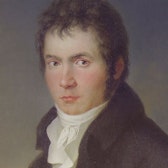
Beethoven intended to dedicate the 'Hammerklavier' sonata to Archduke Rudolph of Austria, who had been his pupil, friend, patron, and chief supporter for nearly ten years.
Performer Biography
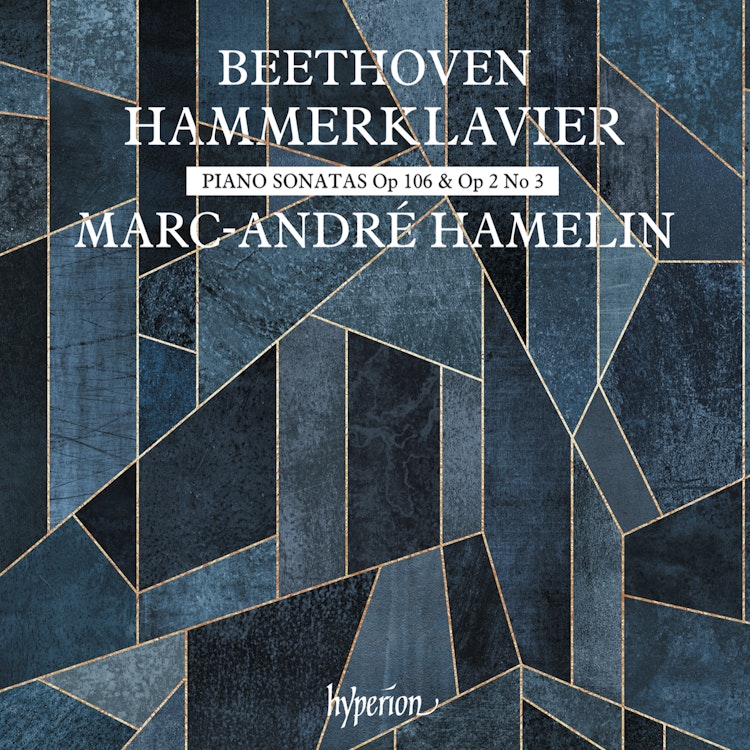
Pianist Marc-André Hamelin is known for his blend of musicianship and technique in established repertoire, as well as his exploration of rare works from the 19th, 20th, and 21st centuries.
Compositional Technique
The 'Hammerklavier' sonata uses every single note of a combined six-and-a-half octaves and almost every key signature from six sharps to six flats, a feature not found in any of Beethoven's other sonatas.
Compositional Technique
The 'Hammerklavier' is the only Beethoven sonata for which he supplied metronome marks, using the recently invented metronome by Johann Nepomuk Maelzel to indicate precise speeds.
Instruments
While composing the 'Hammerklavier' sonata, Beethoven received a Broadwood piano from London, which influenced the sonata's range, as the last two movements use the Broadwood's extended lower compass.
Historical Context
The 'Hammerklavier' nickname arose from Beethoven's search for a German word for the piano, as 'Klavier' could mean either piano or harpsichord at the time.
Performer Biography
Marc-André Hamelin is an exclusive recording artist for Hyperion Records, with eighty-nine albums released to date, covering a broad range of solo, orchestral, and chamber repertoire.