Beethoven's Fourth Symphony explores the concept of a 'macro-pulse', where the basic pulse is maintained throughout the entire work, even across movements.
Compositional Technique
In the Eighth Symphony's second movement, Beethoven may have parodied Maelzel's recently developed metronome with its regular, un-slow tread, although he never admitted it.
Notable Performances
Beethoven's Eighth Symphony was overshadowed at its 1814 premiere by the second performance of his Seventh Symphony and his popular Battle Symphony, Wellington's Victory.
Composer Biography
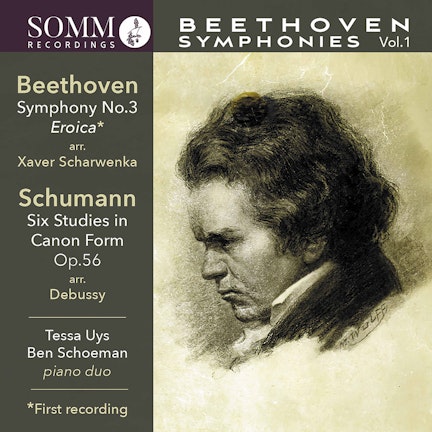
Xaver Scharwenka, whose piano four-hands transcriptions are used on this album, was a pupil of Franz Kullak, who in turn studied under Beethoven's pupil Carl Czerny.
Composition History
Beethoven's Fourth Symphony was commissioned in 1806 by Count von Oppersdorff, a great admirer of Beethoven who maintained his own orchestra.
Interpretation
The Beethoven symphonies on this recording are performed from the piano four-hands transcriptions by Xaver Scharwenka, a Polish-German composer and pianist.
Composer's Artistic Vision
Mozart's opera The Magic Flute, from which the overture on this album is transcribed by Ferruccio Busoni, is a significant tribute to Freemasonry, an order Mozart joined in 1784.
You might also enjoy...
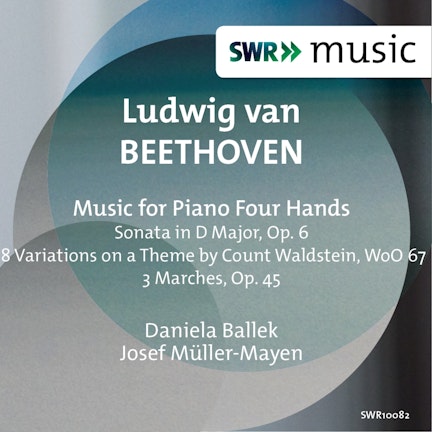
Beethoven: Music for Piano Four Hands
Beethoven Dialogues
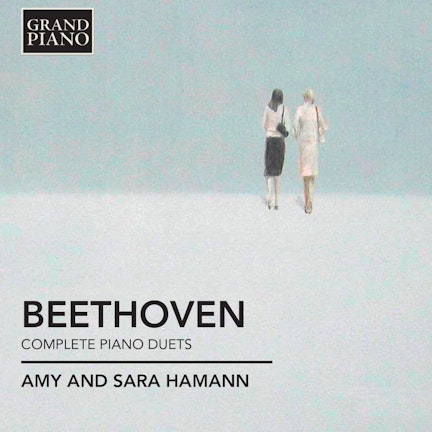
Beethoven: Complete Works for Piano Duet
Beethoven und Schubert hoch zwei
Ludwig van Beethoven: Works for Piano Duet
Beethoven: Complete Works for 4-Hand Piano
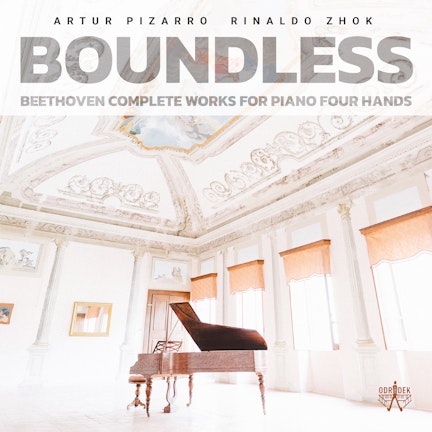
Boundless: Beethoven Complete Works for Piano Four Hands
Korusa Plays Beethoven: The Complete Piano Duets
Beethoven Symphonies, Vol. 4
Beethoven and His Teachers
Beethoven Symphonies, Vol. 1
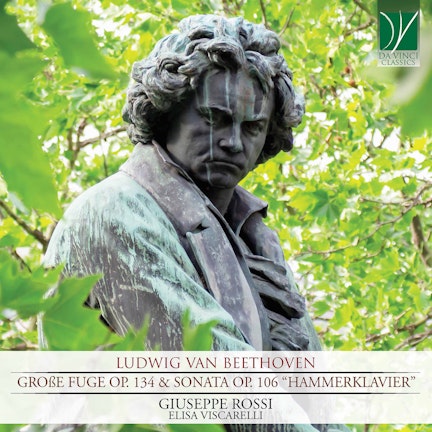
Beethoven: Große fuge op.134 & Piano Sonata Op. 106 “hammerklavier”