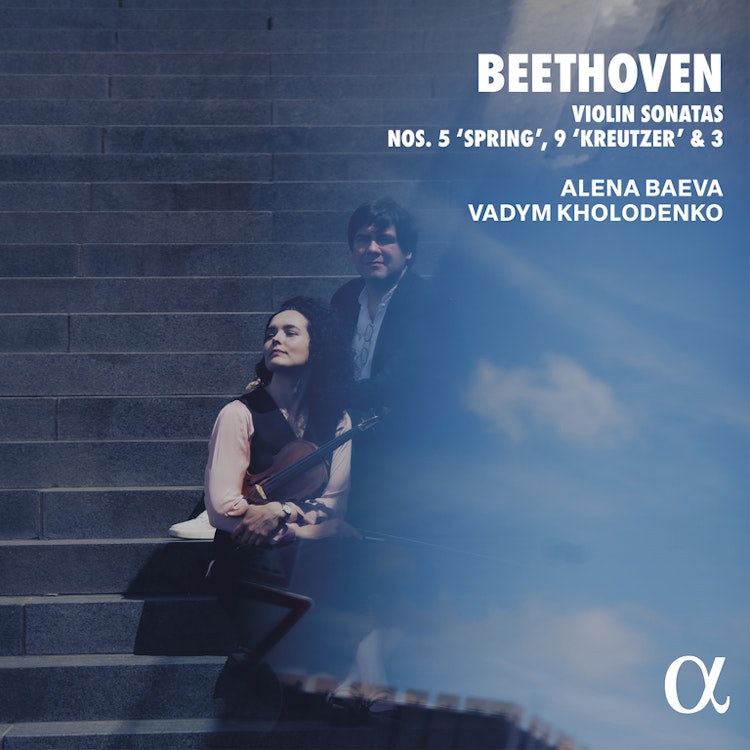
Alena Baeva and Vadym Kholodenko explore the polarity between the 'openness' of Beethoven's musical text and the limits of its interpretation, offering a unique contour of its complexity.
Composer's Artistic Vision
Beethoven's music presents a tension between the 'openness' of the musical text, which invited performer contributions, and the composer's desire for his work to be played exactly as written.
Historical Context
In Beethoven's time, it was common practice for performers to ornament fermatas, which were understood as an invitation for active contribution from the musician.
Performer Biography
Violinist Alena Baeva, born in Kyrgyzstan with Slavic-Tatar ancestry, began violin lessons at age five and now plays on the 'ex-William Kroll' Guarneri del Gesù of 1738.
Performer Biography
Pianist Vadym Kholodenko, born in Kyiv, Ukraine, started piano lessons at six, toured internationally at thirteen, and won the Gold Medal at the 2013 Van Cliburn International Piano Competition.
Composition History
The three sonatas on this recording, Op. 12 No. 3, Op. 24, and Op. 47, were composed between 1797 and 1803, a period when Beethoven gained European recognition and experienced the first signs of deafness.
You might also enjoy...
Beethoven Violin Sonatas Nos. 2, 4 & 9 „Kreutzer“
Beethoven: Violin Sonatas Nos. 3, 7 & 8
Beethoven: Violin Sonatas Op.30
Ludwig van Beethoven, 3 sonatas for Piano and Violin