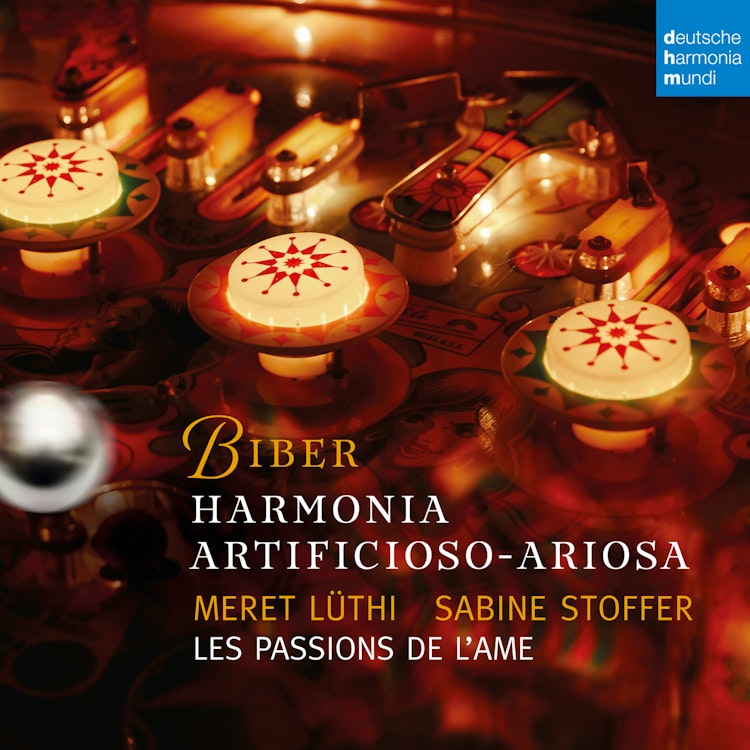
Biber's Harmonia collection uniquely combines highly virtuosic violin technique with scordatura (altered tunings), applied not just to a solo voice but across a trio sonata instrumentation including violins, viola, and violas d'amore.
Composition History
Biber's Harmonia Artificioso Ariosa Diversimodè accordata was first published in Salzburg in 1696 and then posthumously in Nuremberg in 1712.
Composer's Artistic Vision
Like all arts in the 17th and 18th centuries, music was considered an imitative art, aiming to replicate natural sounds or, more importantly, human emotions ('affects') to directly impact the listener.
Critical Reception
The Harmonia Artificioso Ariosa by Heinrich Ignaz Franz Biber, a celebrated Kapellmeister, faced strikingly late acceptance, with its first critical edition appearing only in 1956 and its first recording in 1964.
Instruments
The instruments by Jacobus Stainer, a renowned luthier, used in this recording are provided by the Musikkollegium Winterthur.
Interpretation
Les Passions de l'Ame, the Bern-based early music ensemble directed by Meret Lüthi, aims to create fresh sounds and arouse curiosity for 17th- and 18th-century repertoire through lively interpretations on historical instruments.
Compositional Technique
Biber consistently used scordatura to emphasize specific keys, as keys were associated with particular affects, and this technique intensified the key's character.
You might also enjoy...
Heinrich Ignaz Franz Biber: Harmonia artificioso-ariosa
Rameau: Concerts en Sextuor
Graun: Melancholicus & Sanguineus
Telemann: Essercizii musici, Trio No. 4 in G Major, TWV 42:G6