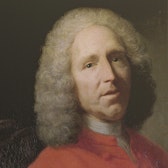
Jean Philippe Rameau, the composer, was in his fifties before he began writing operas, having first established a reputation as a music theorist and harpsichord composer.
Compositional Technique
In these concerts, the harpsichord, Rameau's own instrument, is freed from its typical Baroque accompanying role and leads the music with virtuosity.
Composer's Artistic Vision
Rameau aimed to "conceal art with art," believing music should primarily obey its own rules, with subjects and genres being secondary.
Composer's Artistic Vision
The titles of Rameau's pieces often allude to colleagues and acquaintances, suggesting a dense social network, but also include movements hinting at anti-social behavior.
Recording & Production
The harpsichord used in this recording is a 2008 instrument by Keith Hill, modeled after a 1769 Taskin harpsichord.
Composition History
Rameau's Pièces de clavecin en concerts (1741) were inspired by successful keyboard sonatas with violin accompaniment, likely by Mondonville and La Guerre, but Rameau expanded the instrumental demands.
Compositional Technique
Rameau's concerts resemble Italian concertos only in their three-movement format and were unusually published as scores, with specific instructions for instrumental blending.