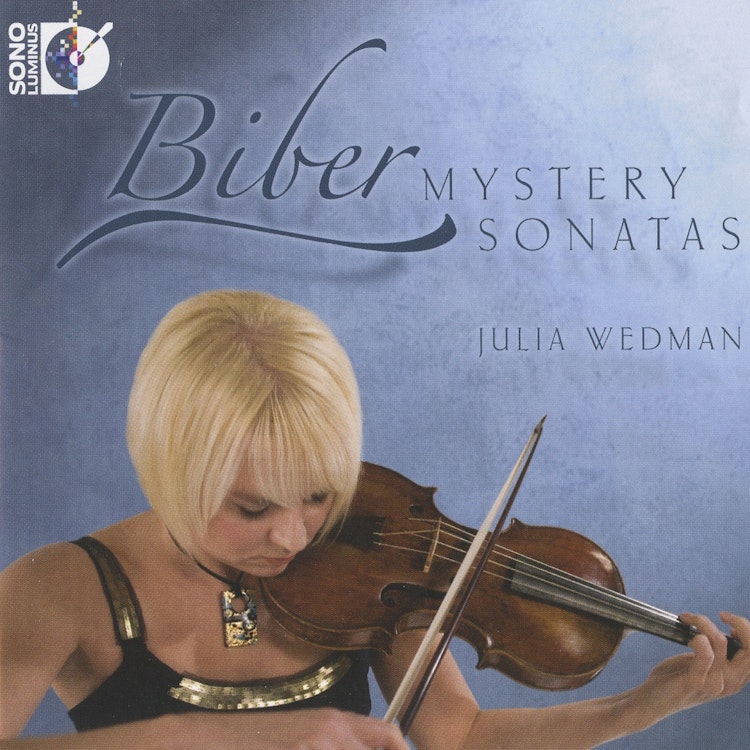
The Mystery Sonatas were dedicated by Biber to the 'XV Sacred Mysteries' of the Catholic Rosary, which Archbishop Maximilian Gandolph von Khuenberg, Biber's patron, highly honored.
Composer Biography
Heinrich Biber, the composer, was considered one of the best violin players of his time, with his solos described as the 'most difficult and most fanciful'.
Interpretation
For the performer, scordatura in the Mystery Sonatas requires a 'leap of faith,' as the written notation appears nonsensical until the violin is properly detuned, at which point the correct pitches sound.
Composition History
The Mystery Sonatas by Heinrich Biber were never published during his lifetime and were only rediscovered in the late nineteenth century.
Compositional Technique
Biber's Mystery Sonatas extensively use scordatura, an intentional detuning of the violin to create specific unusual sonic effects, featured in fourteen of the sixteen sonatas.
Compositional Technique
In Sonata XI ('The Resurrection'), the violin's D and A strings are switched and tuned in octaves, creating a cross shape behind the bridge and reversing normal string order.
Performer Biography
Julia Wedman, the violinist on this recording, is a member of the internationally renowned Tafelmusik Baroque Orchestra and also co-founded the innovative young baroque ensemble I Furiosi.
You might also enjoy...
Forqueray
Telemann: Der getreue Music-Meister, Viola da Gamba Sonata in G Major, TWV 41:G6
Biber: The Mystery Sonatas
Lonati: Sonate da chiesa
Sonatæ Violono solo "1681": Sonata No. 4 in D Major, C. 141: III. Gigue – Double I – Double II
Pisendel. Neue Sonaten
Philidor: Suites for Flute and B. C.
Biber: Complete Violin Sonatas — 1681
Geminiani: VIe sonate di violoncello
Corelli: Sonatas for Viola da Gamba & Continuo
Biber: Unam Ceylum
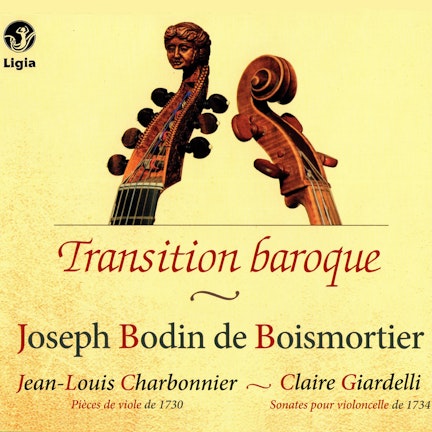
Transition baroque : Joseph Bodin de Boismortier (Trente et Unième œuvre & Œuvre Cinquantième)