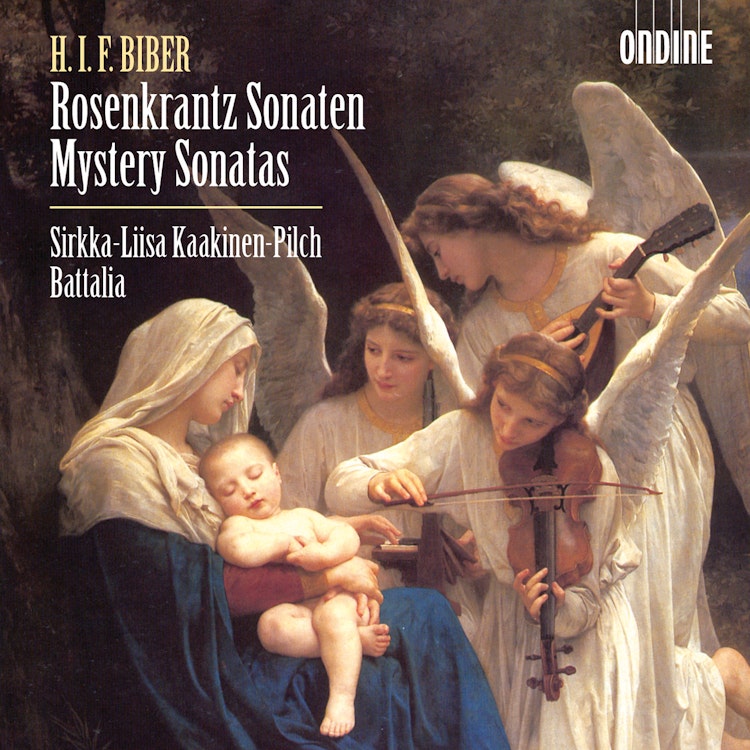
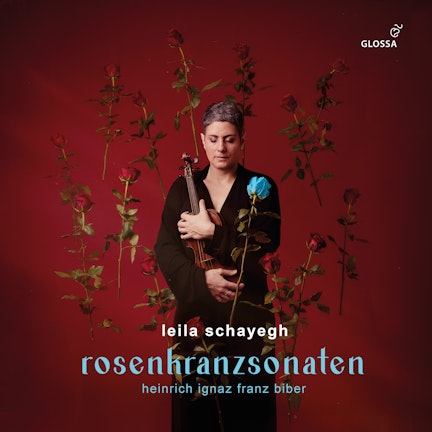
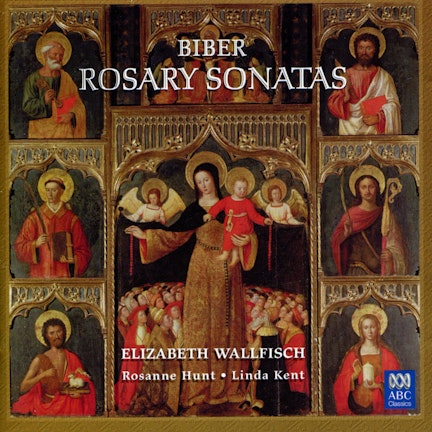
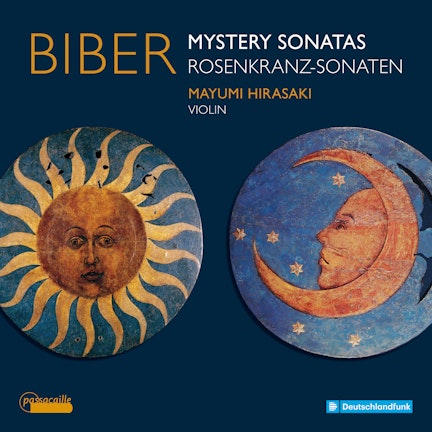
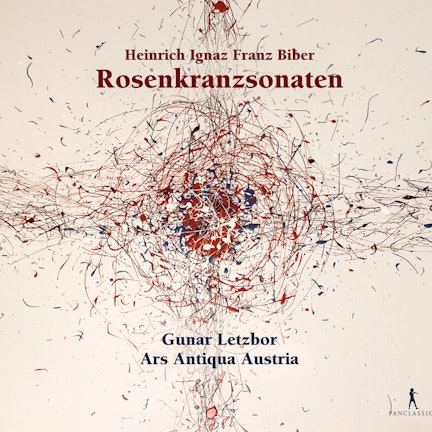
A prominent feature of Biber's Mystery Sonatas is the use of scordatura, requiring the violin to be tuned differently for 14 out of the 16 sonatas.
Performer Biography
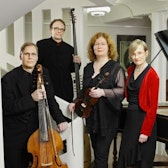
Sirkka-Liisa Kaakinen-Pilch, the violinist on this recording, is a versatile musician who has performed as leader of Collegium Vocale for over ten years.
Composer's Artistic Vision
Biber's Mystery Sonatas follow the Jesuit principle of "docere, delectare, movere" (to teach, to delight, to move), using music to aid contemplation of the rosary mysteries.
Composer's Artistic Vision
Biber's Mystery Sonatas are devoted to the fifteen mysteries of the rosary, a Catholic prayer practice, and were likely intended for performance during rosary prayers.
Compositional Technique
Biber's innovative use of scordatura includes interchanging the two middle strings (D and A) in Sonata No. 11, achieving an octave interval between string pairs for a powerful sound.
Instruments
The violin strings used in Biber's time were made of twisted gut fibers without metal wire, making thicker strings more flexible for scordatura.
Composer Biography
Heinrich Ignaz Franz Biber, the composer, was raised to nobility in 1690 by Emperor Leopold I for his musical achievements.
You might also enjoy...
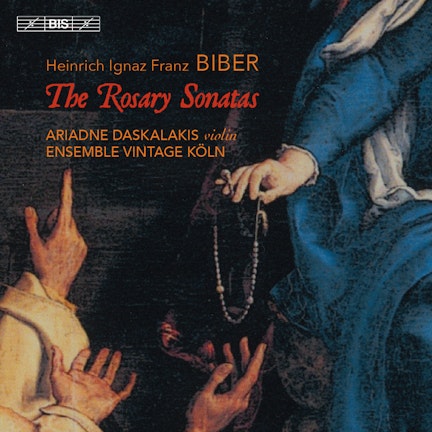
Biber: Rosary Sonatas
Geminiani: Violin Sonatas, Op. 4, Vol. 2
Biber: Rosary Sonatas (Mystery Sonatas)
Mystery (Rosary) Sonatas, Sonata No. 3 in B Minor "The Nativity"
Schenck: Suonate Per Violino E Violone O Cimbalo Op. 7, Vol. 2
Mystery (Rosary) Sonatas, Sonata No. 5 in A Major "The Finding in the Temple"
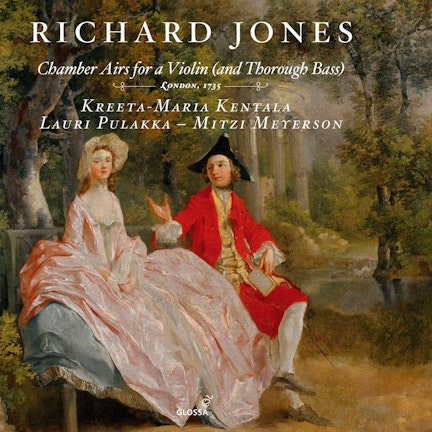
Jones: Chamber Airs for a Violin (and Thorough Bass)
Heinrich Ignaz Franz Biber: Rosary Sonatas (Rosenkranzonaten)