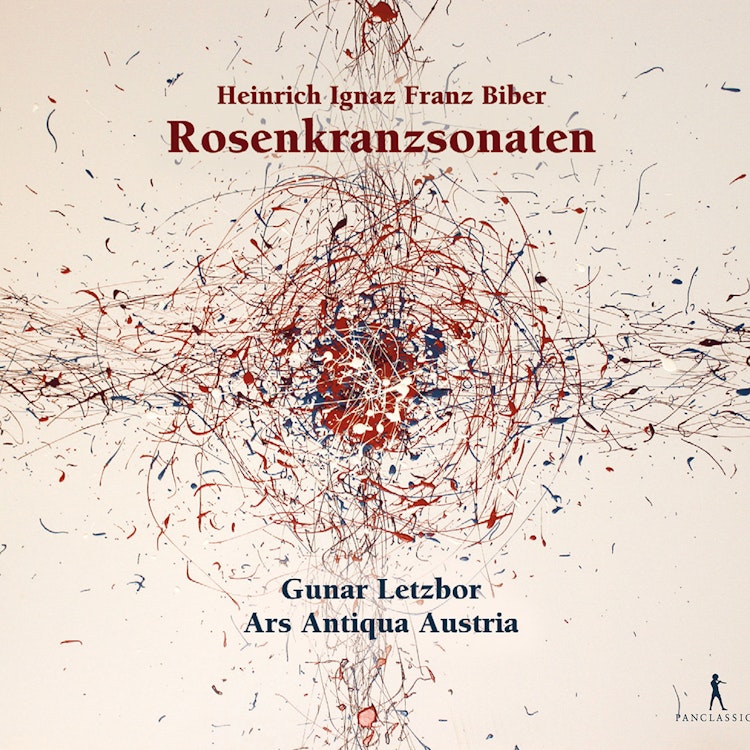
The recording engineer used only two DPA 4006 microphones, which function like measuring devices and do not alter the sound, placed at the optimal listening position.
Instruments
This recording avoids using a harpsichord, as it is considered highly unlikely that Biber would have accepted it as a continuo instrument in a church setting.
Compositional Technique
Biber's Rosary Sonatas utilize scordatura, an unusual tuning of the violin strings, which opens up additional levels of acoustic relevance and changes in tone.
Interpretation
The conductor, Gunar Letzbor, believes that only a believer can truly interpret and grasp the full dimensions of Biber's Mystery Sonatas, as religious feelings are conveyed through subconscious channels.
Instruments
The 8' violone, played by Jan Krigovsky, was almost exclusively used as a string bass in Biber's time, unlike the cello often heard in 17th-century music today.
Recording & Production
The recording was made in the summer refectory of the St. Florian monastery in Upper Austria, a baroque hall known for its cohesive, splendid, and resonant sound.
Interpretation
The performers of this recording, Ars Antiqua Austria, experimented with numerous continuo instrument combinations before deciding on the final line-up, as there were no established models for baroque sonata performance at the time.
You might also enjoy...
Heinrich Ignaz Franz Biber: Rosary Sonatas (Rosenkranzonaten)
Biber: Rosenkrantz Sonaten
Biber: Rosary Sonatas
Locatelli, P.A.: Violin Sonatas, Op. 8, Nos. 1-6
Pandolfi Mealli: Sonate à violino solo (Opera quarta)