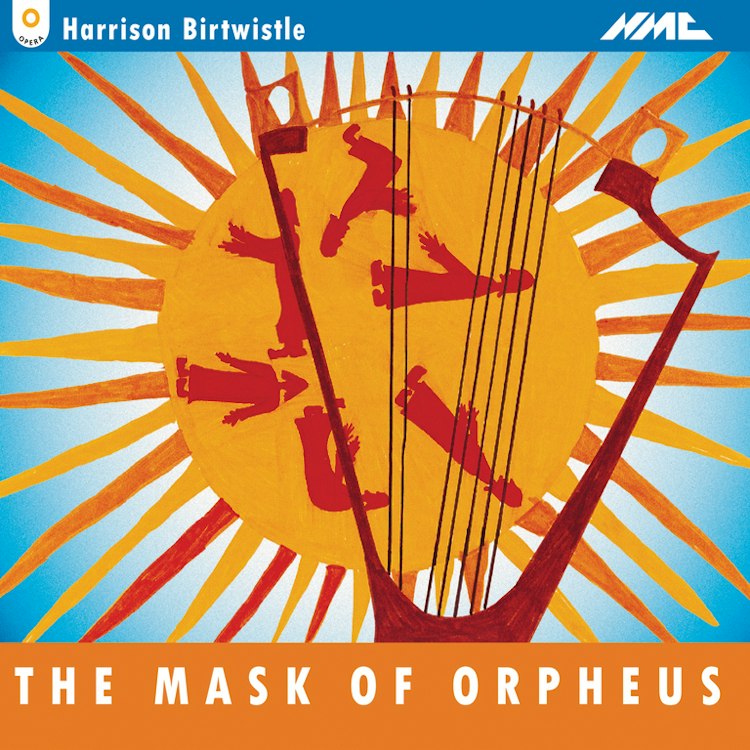
The Mask of Orpheus is divided into 126 discrete events, always grouped in threes, with formal titles such as 'Song of Magic' and 'Hysterical Aria'.
Critical Reception
The Mask of Orpheus was hailed as the most important musical and theatrical event of its decade at its 1986 premiere, and its standing has grown despite a lack of complete performances.
Composition History
The Mask of Orpheus, an opera by Harrison Birtwistle and librettist Peter Zinovieff, was in development for ten years, from 1973 to 1983.
Compositional Technique
The opera features three electronic elements: six interludes with music made from harp recordings, 70 'signals' with an invented language from the names Orpheus and Euridice, and background 'auras' representing seasons and tides.
Recording & Production
The electronic music for this recording was originally created in the early 1980s at IRCAM, an experimental computer music studio in Paris, using advanced computer programs for sound analysis and synthesis.
Composer's Artistic Vision
Composer Harrison Birtwistle and librettist Peter Zinovieff refer to The Mask of Orpheus as a 'lyric tragedy,' and it is a piece of total theatre that transcends the conventional label of opera.
Recording & Production
The electronic music for this recording was originally played back from analogue tape machines during live performances, a nerve-racking process involving remote control and manual resetting.