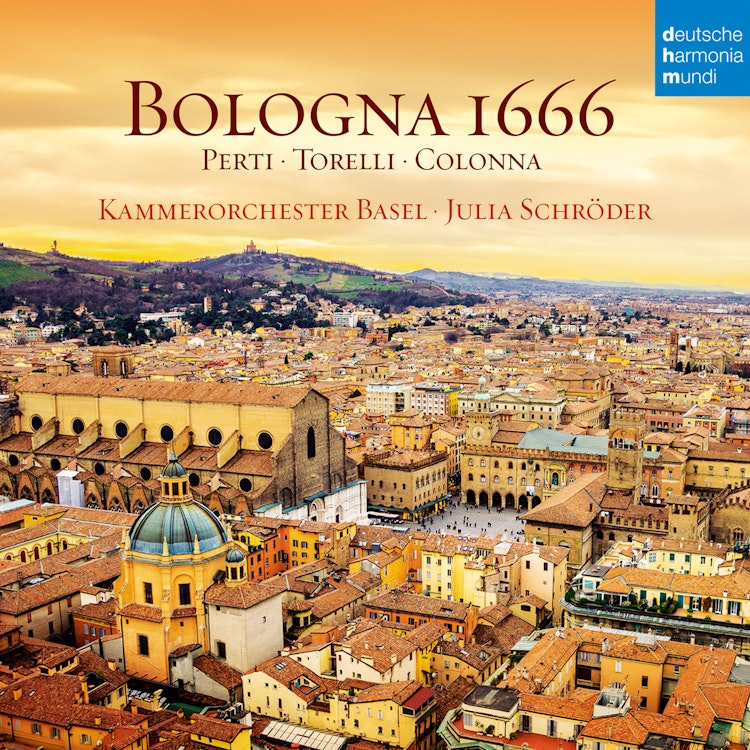
Giovanni Paolo Colonna and Giacomo Antonio Perti, founding fathers of the Bologna school, both served as maestro di cappella at the Basilica di San Petronio and focused almost exclusively on vocal music.
Historical Context
In the 1700s, membership of Bologna's Accademia Filarmonica became a prerequisite for a career as a professional musician, with composers like Wolfgang Amadeus Mozart traveling to sit its entrance examination.
Composition History
Giuseppe Torelli, credited with inventing the solo concerto, clarified the genre by advising that concerti be played with multiple musicians per part and that solo sections be played by a single violinist.
Compositional Technique
Giuseppe Matteo Alberti's concertos feature modulating episodes to create gradual key transitions, a technique found in Venetian composers like Vivaldi but overlooked by other Bologna school composers.
Historical Context
From 1666 onwards, Bologna boasted the Accademia Filarmonica, an association of musicians that continues to thrive today, having celebrated its 350th anniversary in 2016.
Compositional Technique
Lorenzo Gaetano Zavateri's Concerto No. 12, "A tempesta di mare," is an ambitious programmatic work, similar to Vivaldi's Four Seasons, with explanatory notes in the score describing scenes like "onset of bad weather" and "ship upon calm waters."
Historical Context
Bologna, a "free commune" since the twelfth century, lost its political independence in the sixteenth century and came under the rule of the Papal States.
You might also enjoy...
Greene: Overtures
Francœur: 10 Sonatas for Violin & Continuo, Book 1
Biber : Various Works - APEX
Schreyfogel, Schaffrath & Visconti: Chamber Music
Muffat: Concerti Grossi Nos. 7 - 12
Cirri: Cello Concertos, Op. 14, Nos. 1-6
Richter: Sonatas for Flute, Harpsichord and Cello, Vol. 1
Heinsius: Symphonies Nos. 1-6 - Lentz: Concertos Nos. 1 & 2 for Harpsichord and Strings