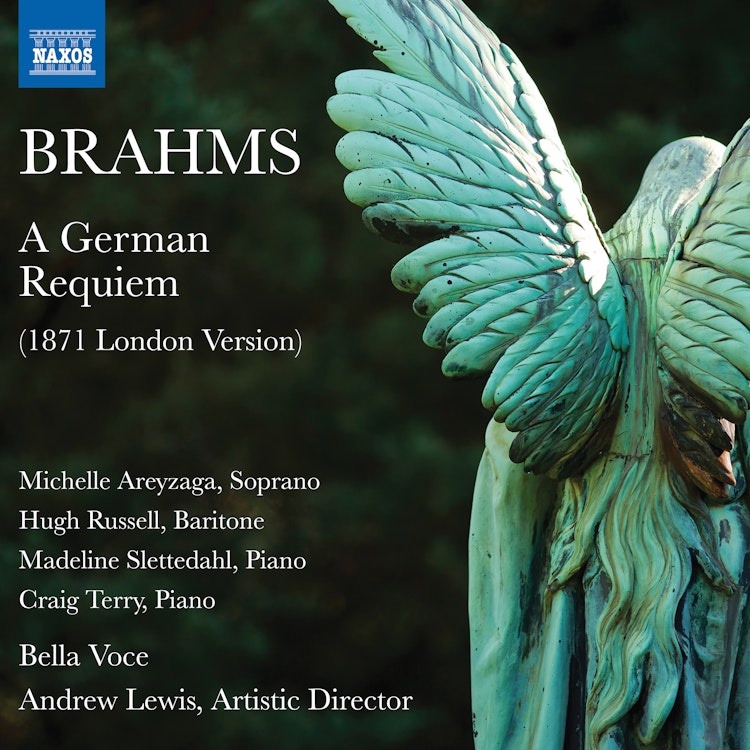
Brahms famously remarked that he would gladly omit the word 'German' from the title of his Requiem and simply put 'Human', indicating its universal message.
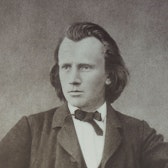
Composer Biography
Brahms later admitted that A German Requiem was written with Robert Schumann in mind, whose words had first welcomed him to the musical world.
Composition History
Brahms's A German Requiem is not a traditional mass for the dead; it does not set liturgy or use Latin, instead drawing texts from Luther's translation of the Bible.
Composer Biography
Brahms began work on A German Requiem in 1865, shortly after his mother's death, and Clara Schumann believed he wrote it in her memory.
Interpretation
This recording of A German Requiem is sung in English, following Brahms's own preference for performances in the audience's vernacular.
Compositional Technique
The piano four-hands accompaniment used in this recording is not a reduction, but a creative reinterpretation by Brahms himself, a task usually left to arrangers.