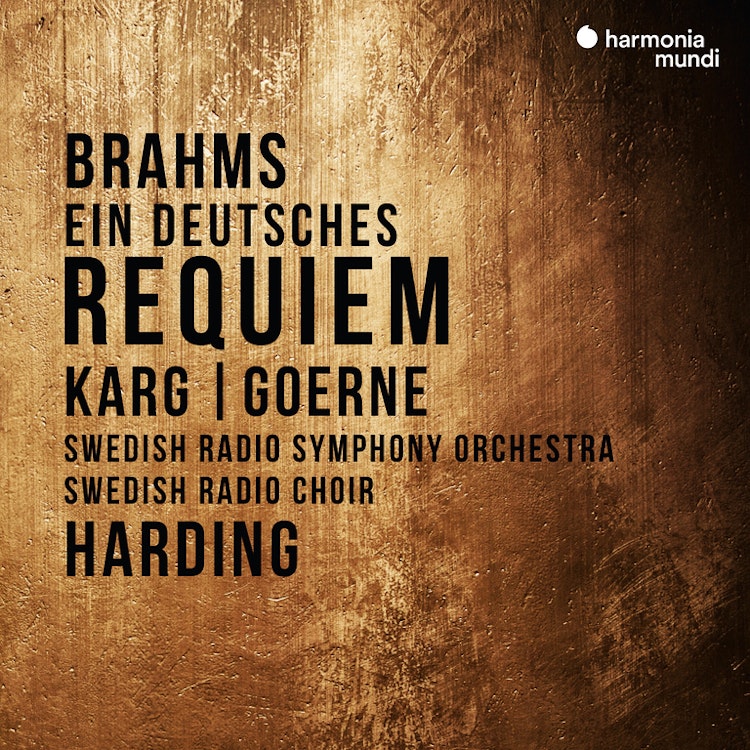
The Swedish Radio Symphony Orchestra and Choir, with music director Daniel Harding, present Brahms's choral masterpiece Ein deutsches Requiem, his German-language meditation on death and consolation. Vocal soloists are baritone Matthias Goerne and soprano Christiane Karg.
Featuring
Daniel Harding
Christiane Karg
Matthias Goerne
Sveriges Radios Symfoniorkester
Radiokören
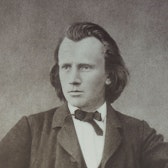
Johannes Brahms
Did you know?
1/7
Composition History
Brahms's A German Requiem was his largest composition and the first work to bring him widespread fame.
Critical Reception
Robert Schumann, a composer and critic, prophetically hailed Brahms as the musical messiah after Beethoven, fifteen years before the Requiem's success.
Compositional Technique
Brahms structured A German Requiem symmetrically, with consoling outer movements that begin with the same words and use a recurring three-note musical motive.
Composition History
The Requiem was inspired by the death of Brahms's mentor Robert Schumann in 1856 and his beloved mother Christiane in 1865.
Composer's Artistic Vision
Brahms, a free-thinking composer, shunned organized religion and dogma, yet composed magnificent spiritual music and was deeply connected to the sacred choral tradition.
Composer's Artistic Vision
Brahms intentionally chose a German text from Martin Luther's Bible translation for his Requiem, rather than the traditional Roman Catholic Latin Mass for the Dead.
Composer's Artistic Vision
Brahms avoided apocalyptic visions of the Last Judgment in his Requiem, focusing instead on comforting the living.
You might also enjoy...
Brahms: Ein deutsches Requiem: Classic Library Series