Brahms used orchestral colors symbolically in his Requiem, omitting violins in the first movement for a dark sound and reserving harp arpeggios for moments of serenity and the word 'blessed'.
Compositional Technique
Brahms's A German Requiem is structured in seven movements, with symbolism evident in the placement of blessings, dark movements, meditative soliloquies, and the central 'miraculous calm' of the fourth movement.
Interpretation
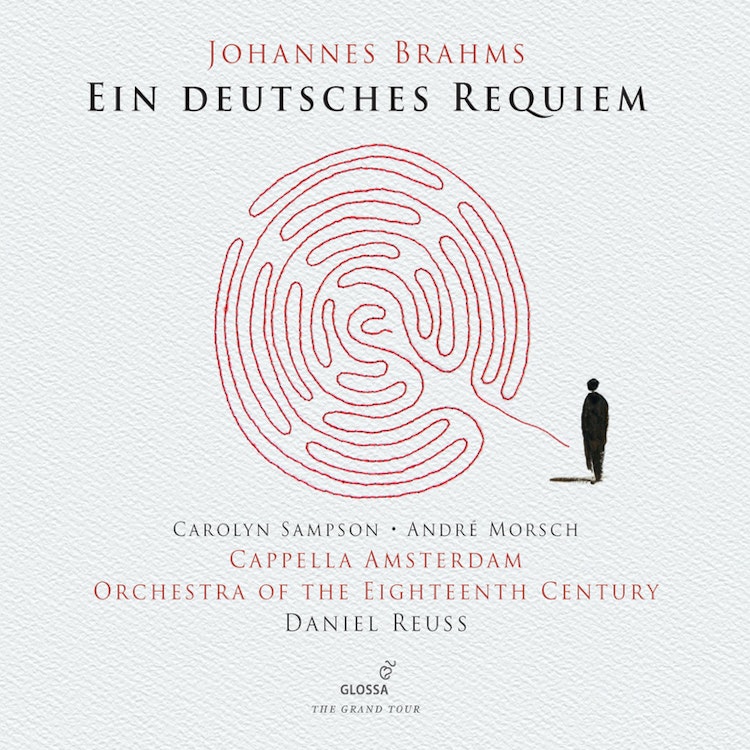
This recording is inspired by Brahms's original tempo markings, which suggest that slower movements were fairly brisk and quicker movements were rather moderate, creating less tempo contrast than often heard today.
Composition History
Brahms began conceiving his Requiem around the time of his friend Robert Schumann's death in 1856, but his mother's death in 1865 ultimately prompted him to set it to music.
Compositional Technique
Unlike traditional Latin Requiems, Brahms's A German Requiem avoids the 'horrid imagery of the last judgement' and instead offers consolation to the living.
Notable Performances
The full premiere of A German Requiem in Bremen on Good Friday 1868 was a resounding success, leading to a repeat performance three weeks later due to public demand.
Composer's Artistic Vision
Brahms intended his Requiem as a message of hope for everyone, explicitly stating he would prefer to replace the word 'German' in the title with 'humanity'.
You might also enjoy...
Brahms: Ein deutsches Requiem: Classic Library Series