Brahms's supporters, including critic Eduard Hanslick, saw him as a champion of 'pure music' in opposition to the 'Music of the Future' promoted by Wagner and Liszt.
Critical Reception
Robert Schumann, a prominent composer and critic, declared Brahms the long-awaited successor to Beethoven in his journal, the Neue Zeitschrift für Musik.
Composition History
Brahms's String Quintet No. 1 was originally conceived with two cellos, but he destroyed that version in favor of one for two pianos, which later became the Piano Quintet in F minor.
Recording & Production
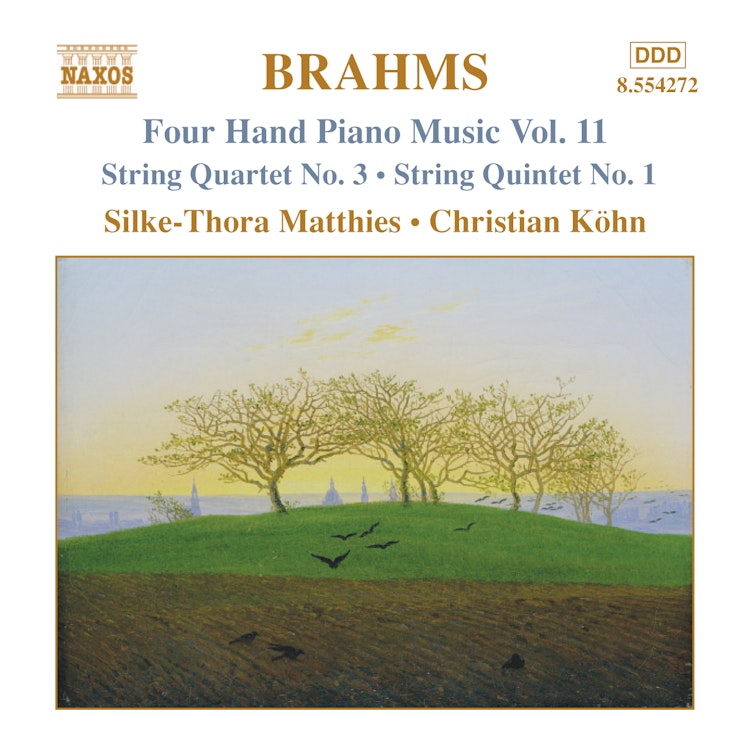
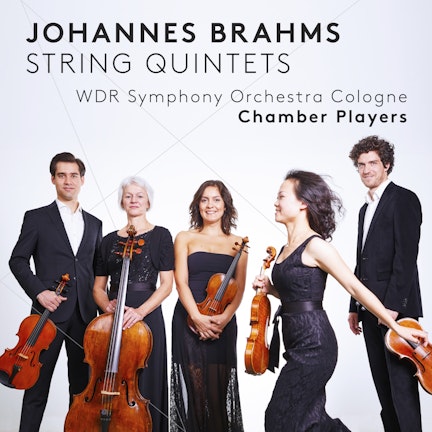
The four-hand piano arrangements of Brahms's string quartets and quintets, as featured on this album, were a common way for people to experience wider repertoire before modern recording.
Performer Biography
The pianists Silke-Thora Matthies and Christian Köhn, who perform on this album, formed their piano duo in 1986 and have won international prizes and broadcast regularly.
Composer Biography
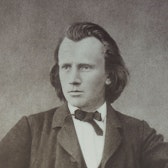
Johannes Brahms, the composer, showed natural aptitude for music from a young age, with talk of him touring as a prodigy by age eleven.
Composer Biography
Brahms met the Schumanns through the Hungarian violinist Joachim, a meeting that proved fruitful for his career.